
The surgery I was watching was getting into the tedious stages, fitting and re-fitting a bone chunk that cracked off when the elderly woman had slipped on a banana peel (yes, you read that right). They already had an assist, so I wasn't scrubbed in for this one. Just as I was looking for a new distraction the orthopedic surgeon's pager went off. Once the bone was broken, we were able to tug it into position, and put a cast on while still applying traction with our hands, just long enough for the cast to harden. By then, the patient was just starting to wake up from the sedation. And while the patient didn't remember a thing - thank goodness - I definitely won't forget doing this for the first time.
A five-year-old boy had fallen out of a tree, and landed on his arm, which was broken. The emerg doc was going to re-set the bone, but wanted the orthopedic surgeon to have a quick look at the x-ray first. They called it up on the computer screens in the OR, and the surgeon gave his blessing that the emerg doc could set the bone himself.
I asked the surgeon if I could go watch the reduction of the bone, and soon was on my way to the ER where I found the doctor. I knew him from working with him in the ER a few weeks prior.
"I heard you're doing a closed reduction - can I watch?" I asked.
"No," he replied.
I was a little surprised, but didn't have time to react before he said, "You're going to do it."
"Uh, I'll give it a shot, but just so you know, I haven't done one before," I admitted.
"That's fine, I hurt my wrist. Come look at the x-ray."
That's when things got exciting.
This wasn't just going to be a regular reduction.
The doc showed me on the x-ray where the wrist had broken through the smaller of the two arm bones, the ulna - but not quite all the way through the radius.
Turns out that for a break like this to heal correctly, rather than just pulling the bone into place, like is done with most reductions, it was important to make sure that the break went all the way through the radius.
And how would that happen?
You guessed it... breaking the radius would be my job.
Sure enough, after a quick briefing, under close supervision, and as soon as the child was COMPLETELY sedated (what, you thought we would do this with the poor kid awake?!), it was time to hold on to the arm just above the wrist, and see-saw it back and forth at 90 degrees until I heard a pop and crunch. And that moment was just as the doc had predicted: "That's when all the eyes of nurses and staff watching will bug out of their heads." Fortunately, the child's parents weren't there to see what was involved.
Friday, June 26, 2009
"...and that's when I broke the child's arm in my bare hands."

Thursday, December 04, 2008
I don't think your arm is "bruised"
He was coming into the family doctor's office I was placed for an entirely different reason, this pleasant, absent-minded, blissfully unaware old chap. "Hello, young fellow!" he said, when I came into the room.
I returned his happy greeting, and asked what brought him in. "Oh, nothing much, just here to get my prescriptions renewed, then I'm on my way! Sorry to trouble you!" He was such a cheery guy.
"Why are you wearing that long hankerchief around your neck?" I asked him, making small talk as I started copying out his drug list.
"Oh, just for a bruise on my arm, it's a little sore. I tripped over my shoelaces while I was getting my morning paper a couple weeks ago." He held up his arm.
My eyes bugged out when I saw it.
His bruise had gone away, but he had much more than that left over - about six inches up his arm from his wrist, he had what is called a "step deformity" - his arm bone was simply no longer straight. An obvious sign, visible from across the room, that his arm was broken, not bruised.
Not surprisingly, the doctor I was working with sent him to the emergency department to get his arm casted.
On my way back home from the office at the end of the day, I stopped at the hospital and called up his x-ray on the computer. Sure enough, he had a definite Smith's fracture of his distal radius, typical of a fall onto a closed fist.
By chance, the emerg doc was walking by, saw I had dropped in to look at the x-ray, and said, "We're about to reduce that patient's fracture - do you want to do it?" Nice!
So, we put the jolly old fellow into an even more blissful state with some propofol ("milk of amnesia," as this white liquid is sometimes called), and yanked and pulled and tugged on his arm to get it back in the right place, then wrapped a cast around it. I love working in small hospitals - a pretty neat chance for followup on the patients, and no other resident or student there at the time so I could just jump in and do the procedure.
Epilogue: I didn't stick around to look at the post-reduction x-ray, but a few days later, I came back to the emergency department and called it up to see if the bones were set in the right place. Randomly enough, there was an orthopedic surgeon charting at the desk next to me, so I told him the story and asked him what he thought of the post-reduction x-ray. He was not impressed - turns out that if someone's arm has been broken for two weeks, it shouldn't be reduced in the ER because it's too far into the healing stages - surgery would have been more appropriate. Well, now I know.
Monday, November 03, 2008
Poking a screaming child? That'll put hair on your...
"Bet you feel the testosterone surging through your veins now, eh?" the ER doc supervising me said. "That'll put hair on your chest."
Then again, I'm sure everyone else in the ED (and all the other wards on that floor) also had a snappy comment for me, seeing as how each and every one of them could hear the screams of my patient.
A young girl had gotten a huge gash in her arm after falling through a plate-glass window, and the emerg doc took one look at her chart and handed it to the resident, who handed it straight to me. At that point I was still unsuspecting, super keen to sew up yet another wound. Boy, was I naive.
After looking at the wound I flattered her quite nicely about being such a trooper, such a large gash and all and so little crying.
Turns out that all my buttering up was for nothing, which I found out as soon as she asked if she would be needing a needle.
That's where I went wrong.
She sensed my instant of hesitation before my answer, and took that as her cue to start screaming at the top of her lungs.
The screaming didn't stop. We tried everything from distraction, to warm blankets, to massaging her temples, to topical anesthetic and intranasal fentanyl, all of which seemed to only fuel the screaming, which lasted well into the procedure, despite the gallon or so of lidocaine I used to freeze the wound.
Even though I have sewed many a wound with very little fanfare, this whole experience actually stressed me out a lot -- much more than I expected it to.
You see, I still have enough compassion left that it makes me feel REALLY bad when I know I'm hurting a patient, especially a child, and I get uncomfortable when I see a pouty look, let alone screams of bloody murder and "PLEASE STOP! NO MORE NEEDLES! OH FOR THE LOVE OF...' Yeah, I didn't know 11-year-olds knew that many swear words. Kids these days.
It was made even better with the parents shooting me the look of death the entire time for causing harm to their little angel. Fortunately, the father's claim that he wouldn't be bothered by the blood soon proved to be quite false, and the emerg doc saw him starting to reel and whisked him away, saying "OK, come with me, you are sitting down over here. Put your head between your legs."
As well, with all the the flying fists and limbs I was pretty scared of buring the syringe or suture needle in my own hand.
In fact, I was even more stressed that I'd be poking the care aide holding the child down. Keeping this saint happy had risen to a very high priority ever since she set aside one of the leftover hospital meals for me (which, despite being hospital food and looking like it had already been digested once, was still food).
The procedure finally ended, and she finally went home, and a strange calm fell over the emerg. In fact, with the young girl gone I could only really hear monitors beeping, ambulance sirens, nurses shouting, and other patients yelling, which was so much more quiet than when that girl was there.
Later on, one of the doctors told me that he used to feel bad poking children because they would cry so much. "Then," he said, "I had my own kids, and realized they cry all the time... even if you are not doing anything to hurt them."
That did make me feel a bit better. But I was still so worked up when it was all over that I considered going to the homeless gentleman and ask if he was gonna finish that bottle of rubbing alcohol he was using to get drunk (tuition is due soon, so I am trying to get all the free hospital food and free alcohol - of any form - I can get). I figured if dealing with the screaming child didn't put my hair on my chest, perhaps some isopropyl alcohol will.
Either way, any more shifts like this and I think I'll start losing hair rather than growing any more.
Friday, October 17, 2008
The call any med student in Emerg is waiting for: "There's been a massive accident."
It was shaping up to be quite a boring shift. Only a couple hours to go, and nothing very interesting. There must have been a notice in the paper that the super keen medical student (myself) was going to be working a shift in Emerg, because there really could not have been any other explanation for the massive numbers of people showing up in droves with a chief complaint of "I have a runny nose."
Then suddenly the night got very interesting. Here's the play-by-play.
6:30 pm :::
A call came in from ambulance dispatch, and the unit clerk quickly summoned the doctor and charge nurse to keep them informed: "There's been a massive car accident down in the valley. A minivan and a car carrying six people in total crashed into each other head-on, somehow got entangled to the point where they were attached, and then both went over the side of the bridge, careened down an embankment, ran into a few trees and then burst into flames. We're setting up for massive burns, tree trunk impalements, major trauma and who knows what else. The medevac helicopter will likely take out the most serious victims to the larger hospital in the next city over, so we'll likely get a few of the less severe tramas...but by the sounds of it, even those will be pretty serious. By the time they get them extracted and bring them in, they should be here in about 50 minutes."
6:40 pm :::
There is a buzz around the department. The night shift MD shows up to start what he had hoped would be another routine shift, and is instead informed about the upcoming chaos, with several curious other ER staff crowding around to hear the briefing. More reports have come in - the area is too heavily forested, meaning the helicopter can't land. All the traumas will be brought in by ambulance to our hospital!!
7:00 pm :::
The night resident has been paged to show up earlier, the afternoon shift MD (whose shift was just ending) made the decision to stay a bit later, and people are busy in the trauma bay setting up IV bags. The care aides and clerks are suddenly finding solutions to the longstanding province-wide 'no beds in the rest of the hospital' crisis, magically clearing up four beds in emerg in anticipation for the incoming carnage. I'm helping out a lot, too, I'm told, by going to see a patient who had a bookshelf fall on her head. And another runny nose.
7:10 pm :::
Another report comes in. The meat wagon won't be in with what's left of the survivors for yet another hour; it seems as though the army or search & rescue might have to be called in to access the area. There's even a suggestion that there might even be gunshot wounds if the drivers got into a road rage argument after the dust settled. In the meantime, my patient with the bookshelf falling on her head turned out to only end up having a textbook fall on her head, the rest of the shelf narrowly missing her body. Her friends were quite concerned, and brought her in. Oh, and she also wants me to assess her runny nose.
7:20 pm :::
The latest from the disaster zone is relayed to the physician: there is an indication that things may not be as serious as they were initially thought. Three of the people walked out of the accident unscathed, but the other three still seem to be pretty serious. No word on the accuracy of the gunshot rumour. For my patients, I continue to prescribe kleenex, one of the few things that I as a medical student can actually dole out, like it's nobody's business.
7:40 pm :::
Word arrives - the ambulances are on their way! One is coming Code 3 - lights and sirens - with the major trauma victim. The other two will follow, as they're coming routine, without lights and sirens, as their patients aren't too serious. The afternoon shift doctor figures that she may as well go home, since things aren't as bad as they first seemed.
8:00 pm :::
Things have somewhat died down, until the first ambulance is heard in the distance bringing in what must be the major trauma victim. A crowd of ER staff instantaneously gathers at the ambulance bay entrance to greet the incoming disaster. Notably absent from the crowd are the seasoned veterans among the emerg staff, and the doctors, who are going about their own jobs.
8:05 pm :::
The ambulance has screeched to a halt, and the paramedics are throwing open the rear doors to reveal their mangled cargo. The crowd that gathered utters nearly an audible, collective groan of disappointment as the patient is wheeled out of the ambulance, sitting up on the stretcher, laughing and joking with the paramedic, without so much as a single indication of major burns, tree trunk impalements, or missing limbs or appendages. In fact, the patient has a makeshift splint on one of his legs, and other than that, appears to be completely well. The patient is deemed non-urgent, and the doctor sends me in to see him. He explains that the accident was pretty much a fender-bender that ended up with his car ramming the guardrail. And despite having what might have been a broken leg, he says that it doesn't hurt that much, and that actually the major thing bothering him right now is his runny nose.
Friday, September 19, 2008
When patients try to fool doctors - four interesting types of fakers
 Most people have heard of Munchausen's syndrome, a fascinating condition in which patients try to fake a condition in order to draw attention or sympathy.
There are a few syndromes that doctors need to keep in mind, some of which are quite fascinating, in which the patient tries to fool the doctor for various reasons. Here are some of those conditions, how the patients fool the docs, and how the docs avoid being fooled.
1. Drug-seekers
What are they –
In a sentence, the bane of any ER physician's existence. They're either addicted to pain meds, or obtain and fill prescriptions then sell them on the street to addicted people for a huge profit.
How they fool doctors -
Drug seekers can be very slick. I have seen a patient had another doctor vouch for them, one who wore their full police uniform, an adorable 80-year-old church organist, and even nurses and doctors ... all of whom were found to be getting prescriptions for pain medications and selling them illegally.
How doctors recognize them -
Besides being highly suspicious of any patient who asks for narcotics, some regions have databases that doctors can use to determine if a patient has filled a suspicious number of pain prescriptions. However, some drug seekers raise a lot of suspicion on their own. They'll claim to be allergic to every non-addictive type of pain medication, which is statistically unlikely. Others are just bad actors. They’ll shriek and cry at the lightest touch when a doctor pokes their back to find out which part hurts… then later, the doctor will give them a friendly pat on the back, and find that the supposedly painful spot no longer seems to hurt.
2. Malingerers and Insurance Hopefuls
What are they -
A "malingerer" is defined as a person who fakes an illness with the intention of avoiding duty or work. I'll lump these in with patients who fraudulently fake or exaggerate illnesses to try and get insurance payouts.
How they fool doctors -
Malingerers will seem to have a lot of pain, and some actually are suffering from very real pain. They use this, however, to prey on a doctor’s empathetic side. They can also be quite convincing actors when they demonstrate just how incapacitated they are.
How doctors recognize them –
By knowing the physical exams and anatomy very well, doctors can get suspicious if the results of a few different tests of the same joint or muscle aren’t consistent. Some malingerers, though, can be fooled quite easily. Even I have had my suspicions raised with a patient who struggled to raise her arm a few inches when I asked her to demonstrate her range of motion. When I then asked her to show me how high she could raise it before her accident, she effortlessly shot her arm up high above her head!
3. Psychogenic nonepileptic seizures
What are they –
This is a term for people who appear to be having seizures, but it turns out that they are actually not suffering from epilepsy – for various reasons, they’re faking the seizures.
How they fool doctors –
Anybody in a doctor’s office or emergency room who is having what appears to be having a violent seizure, will obviously get the benefit of the doubt. In fact, in some cases, it is many years of investigating and giving high doses of seizure medications before a doctor realizes that the patient has been having nonepileptic seizures the whole time.
How doctors recognize them –
Research has shown that nonepileptic seizures occur more commonly in a doctor’s office or waiting room, or when there is a witness around. Some medical textbooks suggest giving such patients a sugar pill or an injection of water while telling them that this medicine has been known to cause seizures, and seeing if the patient starts shaking. While this can seem deceitful, the lie isn’t usually necessary: some patients still have these fake seizures even if they are told that they are being given something that can induce both real and fake seizures. Other things doctors look for are things such as where the patients bite their tongues, which is often in a different location for real and fake seizures, and the length and frequency of the seizures.
4. False comas
What are they –
Hopefully I don’t need to explain what a fake coma is. I will mention though, that people fake comas for a variety of reasons. Some people with psychological conditions feel safe in a hospital, and fake a coma so they are surrounded by doctors and nurses. Others have been found to fake being knocked unconscious on a ski hill, because they can’t afford a bus ticket home and would instead prefer taxpayers pay for a helicopter to fly them to the nearest city.
How they fool doctors –
By laying very, very still.
How doctors recognize them –
While there are some non-invasive tests that can be done to determine if a coma is indeed real, sometimes doctors aren’t even trying to “catch” a fake coma when they do their neurological exam and find that some results don’t add up. Also, patients who appear to be in a coma but resist the doctor opening their eyes, or flinching when the doctor’s stethoscope swings close to their face, obviously raise suspicion. Obviously to determine legitimacy it’s important the doctor knows what is normal, because strangely enough, patients with legitimate comas have been seen to do odd things such as cross and uncross their legs.
That’s not to say, however, that these “fakers” don’t need help. While the financial gains for drug-sellers or insurance scammers are usually based on greed alone, people who are addicted to drugs, or feign comas and seizures, can have very real and complex psychogenic conditions (to give you an idea of how complex these conditions can be, some patients may not even be aware they are faking). While they can make a doctor’s work more challenging, at the end of the day all of these people do need real treatment – not with narcotics or anti-seizure medications, but with psychological counselling to determine the underlying reasons that are compelling them to fake these conditions.
Wednesday, August 20, 2008
He barely made it out alive
 The rain was pouring into the windshield. The headlights may well have been candles, since they did barely anything to light up the dark night, especially around the corners and over the crest of the upcoming hills.
And of course, it had to be in these horrible driving conditions, was when he heard and felt a definite THUMP. He'd hit something. His wife started shrieking. "You killed it!"
After slowing down to a stop on the side of the road, he sat and took a breath and thought in apprehension about how cold it would be stepping out into the rain. As his wife's yelling got louder, he realized that no matter how cold it would be outside the car, at least it would be quiet, and he jumped out into the rain.
First was the priority of seeing if his car was damaged. Great, he thought to himself. That bumper is going to be at least a thousand bucks.
Then was the important part of checking on what he had hit. Groundhog? No, it seemed bigger. A deer, perhaps?
As he walked towards the black figure on the road about twenty yards back he could tell it was injured, but definitely still alive. Any doubt of that was eliminated when his wife made the assessment from the safety of the car, at a loud volume - "Oh noooo! It's still alive! It's suffering!"
She begged him to put it out of its suffering. But what was it? As he got closer, the figure, barely lit up by the red taillights of his car, started to take on a familiar shape... that of Jeddy, his favoured teddy bear from when he was a child.
Oh my goodness, he realized. He ran over a baby bear cub.
"Dooo something!" his wife yelled, as he watched it trying to lift its broken body, to drag itself to the side of the road. It was clearly suffering. What should he do? Run it over again, he thought? No, that's inhumane. Hit it on the head with a shovel? Maybe, if he had a shovel.
Going back to the car, and rummaging through the trunk, the rain now soaking completely through his dress clothes, he found that no, he definitely did not have a shovel, and that the only suitable tool of humane death in his trunk was the noble tire iron. "Come on, honey, let's just go," he pleaded. "It will die on its own."
"Nooo!" she protested. "You have to do something!"
Back he went to the dying creature.
"I can do this with one swift blow to the head," he thought.
After one blow, he knew his estimate of one blow was way off. He hit again. Not enough. And again.
It was somewhere between the fifth and fourteenth blow, from what I'm told, that the bear cub's mother lumbered onto the road. She saw this unfortunate this man leaning over her baby, beating the last breaths of life out of the cub with a tire iron. And so, rearing up on her hind legs to her full height, she reacted, in the way that only a mother grizzly bear can.
And that's the story of how I, working a nighttime ER shift, got to see a patient who had been attacked by a grizzly bear.
Rural medicine can be pretty interesting, that's for sure.
Sunday, September 23, 2007
"I'll show you, bitch!"
 The other day at the hospital, while I was shadowing in the emergency department, a physician called me over to the x-ray computer terminal.
"Vitum, come take a look at this."
He showed me an X-ray very similar to the one I've borrowed from Wikipedia thanks to the GNU Free Documentation License, photoshopped to match my story, and placed here.
"What's wrong with this picture?" he asked.
"Well," I replied, "I haven't done my musculoskeletal study unit yet, so I could be way off... but aren't hands supposed to be attached to arms?"
"Right!" the doctor replied. "Trust me, the story is just as good as the X-ray. It even made the newspaper."
Assuming that a story in the newspaper presents fewer issues of confidentiality, I'll share the exciting story with you here, with only a few altered details. Truth is indeed stranger.
Apparently, this gentleman was involved in a fight with his girlfriend, and all hopped up on drugs. The fight got more and more heated to the point where our patient reached his boiling point. "FINE!" he shouted. "I'LL SHOW YOU, BITCH!!!"
 And show her he did. He proceeded to leave the house, go to the garage, and fire up the chop saw. He placed his arm under the saw, and sliced his hand off clean through at the wrist.
It gets better.
He realized that he was bleeding profusely, as typically happens when you slice your hand off (I assume), so he figured he should do something about that.
He went into the kitchen, fired up the stove, and in tribute to what happens in one of the Rocky movies - so I'm told - he mashed the freshly-severed stump of his arm into the red-hot stove element, cauterizing it to stop the bleeding. SSSSSSSssssssssttttttt.
Monday, September 17, 2007
One Story, Two Endings. Clearly I'm not a doctor yet.
The doctor looked at the patient's chief complaint on the chart. "Palpitations, SOBOE." He looked up at the nurse and made a joke out of it. "SOBOE - Shortness of breath on exertion... even I get that. Who doesn't get short of breath when they exercise?" The nurse laughed. ---
The doc grabbed the patient's ECG, which the nurses had already done and clipped to the patient's chart. One quick glance told him that it was a textbook example of normal sinus rhythm with the odd premature ventricular beat (PVC) - when the ventricles contract before they receive a signal from the sinoatrial node - something that happens in normal, healthy adults and is absolutely nothing to worry about.
"Hi, I'm Dr. Vitum Medicinus," said the doctor, scrawling his initials on the ECG sheet to show he'd read it, while walking into the patient's room. Dr. Medicinus took a quick history, and the patient described the thump in his chest that was consistent with a PVC. "We'll take a few blood tests and see how they turn out," said Dr. Medicinus, as he scrawled "MI Protocol" in the orders section of the chart. He was just covering his ass. He knew that the patient didn't really have a heart attack.
Sure enough, the blood tests for a heart attack were normal. "Nothing to worry about - PVCs are entirely normal if they're as infrequent as yours. You'll be just fine," said Dr. Medicinus as he walked back into the room. "If it gets worse, come on back in, but you're good to go now."
-----
The medical student looked at the patient's chief complaint on the chart. "Palpitations, SOBOE." He looked up at the doctor he was shadowing and made a joke out of it. "SOBOE - Shortness of breath on exertion... even I get that. Who doesn't get short of breath when they exercise?" The doctor laughed.
The doctor picked up the patient's ECG, which the nurses had already done and clipped to the patient's chart. One quick glance told the doctor that it was a textbook example of normal sinus rhythm with the odd PVC. Even the med student picked up on this.
"Hi, I'm Dr. Alex O'Brien," said the doctor, walking into the patient's room, "and this is Mr. Vitum Medicinus, a medical student working with me today; is it okay if he watches?" The patient nodded. Dr. O'Brien took a quick history, and the patient described the thump in his chest that was consistent with a PVC. "We'll take a few blood tests and see how they turn out," said Dr. O'Brien, as he scrawled "MI Protocol" in the orders section of the chart. Vitum thought to himself, "There's no way this patient is having a heart attack."
Vitum was right. Sure enough, the blood tests were normal. However, the doctor's years of experience told him to be cautious, and keep his mind open to other possible diagnoses. "I'm going to order one other test," he said.
Dr. O'Brien told Vitum that because the patient had just had his appendix out a few weeks ago, and was complaining of shortness of breath, he should check the patient's D-dimers - a blood test to measure if the body is breaking down a blood clot - as the patient was at risk for a pulmonary embolus - a clot in his lungs.
Vitum kicked himself. He remembered quickly dismissing the patient's complaint of shortness of breath. Actually, worse than that - Vitum had made a joke out of it.
Sure enough, the D-dimers came back slightly elevated - not too high, but enough that the doctor wanted to get a CT to make sure. An hour later the CT came back positive for a pulmonary embolus - a blood clot in the patient's lung.
If I was the doctor, I would've sent that patient home. Maybe killed him. Just as described above.
Apparently it's a good thing that I'm not actually responsible for any patients yet. I'm glad thing medical school is four years, not one... I've still got a heck of a lot to learn.
Saturday, August 18, 2007
Top 10 List: Terrific Tips for Stupendous Suturing
Today, while shadowing in the ER, I sutured real people for the first time. Twice.
Clearly, this makes me one of the world's leading expert on skin sewing. Ask any doctor.
This, and watching dozens of lacerations put together, and taking part in a suturing workshop with very realistic artificial materials designed to perfectly simulate human skin (those materials being made of box cardboard).
Fortunately, it was the second patient - not the first - who asked, "Have you done this before?"
I answered him truthfully. "Yes," I said.
So, having learned so much from my great wealth of experience, I have decided to benefit you, the reader, with ten terrific tips for stupendous suturing of lacerations.  If you're a medical student, like myself, use these ten tips and you will blow away your classmates.
If you are a nurse or patient, read this list then verbally chastise any physician you see who does not follow these ten tips.
If you are a doctor, verbally chastise yourself right now, out loud, under the assumption that you do not know all of these ten tips.
I request no repayment for this tremendously valuable guide, other than the act of "suturing" be re-named "Vituming." With a capital V.
10. Don't have your stethoscope draped around your neck while you suture. Place it in a pocket or on a desk.
It will get in the way and ruin your sterile field (not good) - very important for emergency department laceration suturing.
(Actually, research has shown that sterile gloves and sterile saline are not needed for ER suturing, as they don't significantly reduce the rate of infection.)
9. Don't have your ID badge on a lanyard. Use a clip instead.
It will get in the way and ruin your sterile field. So not good.
8. Don't have your lab coat on. Roll up the sleeves or remove it.
The sleeves will get in the way of your sterile field. Like, totally, so not good.
7. If the patient is getting woozy, tell them not to look at the wound.
The patient I saw was very pale. Research shows that by telling them not to look at the wound, they will not get woozy (research pending). Research also shows verbally demeaning or physically assaulting the patient will help with compliance on this point.
6. Don't bend the needle.
This will make it a pain to get through the wound. This is partially accomplished by grasping the suture needle at the right point with the needledriver - close to the end.
5. DON'T POKE YOURSELF.
Generally, getting patient blood inside you is something you should try to avoid. Mostly for the pain, I think that's what I was told once, but there are supposedly some blood-borne illnesses that are nasty.
4. Poke the patient.
You can't suture a patient if you don't puncture their skin with the suture needle. Trust me on this one. This is more important than #5; as well, the comedic value is decreased if it is ranked higher than #5.
3. Ignore the fact that the image associated with this post shows suture removal, not suture administration.
Allowing little errors like this to cloud your mind while you suture will distract you from doing a good job. Your patient will complain, and likely sue you.
2. Efface the edges.
For improved wound healing. Or something like that.
1.
Sorry I couldn't come up with a #1. What did you think I was, an expert on the topic? I've only done this twice.
By the way, before you follow any of these, make sure you read the disclaimer below. Especially the part about not listening to any advice on this blog.
(If you actually are an expert, by all means, post your tips.)
Wednesday, August 15, 2007
The day the ER nurses ganged up on me
I swear I was being good. Really, I was! Honest!
But still, they hunted me down and cornered me, like an angry, bloodthirsty pack of shewolves avenging the death of their young. Or something like that. Tonight, during a ER shadowing shift, I was sitting unsuspectingly at a computer (I don't know how else to sit), looking up the difference between ringworm lesions and lyme disease target lesions. You know, minding my own business. I thought I heard some nurses off in the distance saying something like "student" or "medical student"... but I brushed it off and ignored it. I went back to my googling.
And then it happened.
I felt a massive shadow coming up behind me.
I turned around... in time to see half the ER nursing staff approaching me in a pack akin (great word) to a pack of shewolves (yes that word is worth the repeated reference).
I hadn't done anything wrong (other than written a certain blog post several weeks ago which shall remain unnamed here) but I figured I was screwed.
I felt like those folks must feel when the infamous Sumdude - a.k.a. 'some dude' - jumps them without warning, rhyme, or reason. By the way, for those who don't know, Sumdud is an emergency medicine phenom (another great word) documented by paramedics, respiratory therapists, nurses, and doctors alike.
Anyways, they surrounded me, towering over me - only because I was sitting down - and shone a light in my face. And thus they began their brainwashing session.
"Be nice to nurses!" they said. "Nurses know best." The skinny one in the back of the herd adjusted the giant, whirling spiral which I can only assume was meant to hypnotize me into oblivion. "And nurses love coffee - bring your nurses coffee."
I shifted uncomfortably. Their tactics were working. I was feeling their efforts to convince me were working. I nodded my agreement in an attempt to signal to them that the giant stainless steel probe they were holding just inches from my face wouldn't be necessary.
Okay, I was wrong about the light, the whirling spiral, and the probe. But a group of nurses did corral me today, and did tell me to be kind to nurses. They were mostly joking, but obviously there is a certain level of seriousness to their comments - I'd be dumb to assume that these nurses haven't been cruelly treated by a doctor at one time or another - though the doctors I was working with today were outstanding.
Fortunately I was able to explain to them the same thing I said in that other, previously mentioned but unnamed post, that I've been told all this already by my nursing friends and my nurse mother.
I wish this story had a more dramatic ending, but that was it, really; my comments seemed to appease them. The rabid pack broke apart, most of the nurses wandering off into the meds room, still laughing about their indoctrination method, and sharing stories of nursing back in the days when nurses used to stand up when doctors entered the room and mustard poultices and turpentine were common treatment methods, and I went back to my Tinea corporis and Borrelia burgdorferi.
Saturday, February 17, 2007
The Politics and Red Tape of Paramedics
Riding along with the paramedics was indeed thrilling, though at about 11:00 am on the day of my ridealong, that would've been a hard sell.
"My friends think this job is all blood and guts," said Jim, the paramedic I was shadowing. It was funny because we were in our second hour of waiting around at a hospital. If there are no beds in the emergency ward for the patients that paramedics bring, then there is no nursing coverage for those patients, so the paramedics are required to stand around and wait at the hospital. "At some hospitals, there will be an ambulance crew standing around for entire shifts." This pulls ambulances off the roads, and if someone needs help, the nearest ambulance is then called in. "Nearest" is used loosely - the next community over may be fifty kilometers away.
I got another glimpse into the red tape tangle that is the ambulance service. While there are transfer ambulances, glorified taxicabs dedicated specifically to transfer patients who can't get a ride on their own to get simple tests done, (ie. patients in nursing homes and the like), there aren't enough of those cars, so the load invariably spills over into the lap of the paramedics who are trained to save lives. Some provinces / regions have private transfer ambulances but apparently we don't. This means that instead of being able to respond to a call within minutes, the paramedics are taking Papa to his stomach ultrasound. Well, I shouldn't make generalizations; it's not all old people that are transferred. One of the people we transferred was a young man of about 35. He was involved in a car accident years ago, and had no family or insurance to really take care of him. So, he spends his days in a nursing home surrounded by geriatrics, paralyzed, unable to get out of bed on his own or do anything for himself. My heart went out to him.
At one point the paramedics told me, "When you're a doctor, don't order an ambulance for people who clearly don't need it." Doctors apparently have this power. The paramedics were getting pretty frustrated taking this old woman home from the ER who clearly could have just gone in a cab. I could see their annoyance... they could've been out doing a real call instead of playing cabbie. "I thought taxicabs were supposed to be yellow," I joked.
The best example of red tape, which had the paramedics I was shadowing hopping mad, was the time we dropped off a patient at a hospital for a test. When we pulled in, there were 4 other ambulances plus a supervisor car. "Is there something going at St. Sickkus Hospital that we should know about?" radioed in the driver. Turns out the hospital was closing down the ward, so they brought a bunch of ambulances to bring the patients out. Eight paramedics and a supervisor milling about waiting to be told which patients they would take. It turned out there were only eight patients in that ward. "They could've just double-stretchered and gotten the transfers done in one trip."
The politics don't end at paramedics, though; I've got some good times to look forward to, apparently. My friend shadowed in the ER the other day and told me that they had a patient who was bleeding from his rectum after his surgery. The ER docs called surgery, who sent down their first-year resident - a doctor of, oh, perhaps six months - to deal with the problem. Surprise surprise, he had no idea. He suggested they call GI. "Not my problem," said the GI doc, and wouldn't show up. "Call internal" somebody suggested - no dice. Frantic, they called trauma surgery as a last resort, and pretty much got laughed at as they tried to advocate for the patient and explain how this could be considered trauma. The ER doctor ended up having to deal with the situation on his own.
But I suppose every job is like that. I interned in an office where you couldn't go elsewhere for your graphic design needs because everything had to have a uniform look, but then again, the graphic design department there took weeks to get even a simple invitation or notice done. People caught wind of my knack for composition and I started getting a lot of requests to help other departments with their design needs. The funniest part was having to be discreet about it. Can't let the designers catch on. Don't want to get a talking-to.
You think I would have learned my lesson working in one office... perhaps I haven't. In a feeble attempt to figure out what I want to do this summer, I put in an application this week to work for the national medical association as an intern. I have a funny feeling that such a job just might end up being laden with politics as well.
Wednesday, November 08, 2006
Top 10 list: Things that make me feel like I'm becoming a doctor (as of First Year)
EDIT (11/21): I had to add a number 11. Find it here.
I kindof had to make this list to convince myself that I'm actually in med school. Like I've mentioned before, our first semester is a lot of just basic biology, things I learned in undergrad (biochem, physiology, etc.), so I can't help but feel that I'm still just taking more biology classes. Until I get to third year, where I report to the hospital every day (and on weekends...and I am given evening shifts...And I'm put on call...) it still seems kindof like school, still. Hopefully this changes a bit in January when we start going through the body organ systems, block by block. Until then, I have this list to go by:
10. Got my second issue of the CMAJ today
It always makes me feel like a member of the profession.
9. Calculating IV infusion rates
Finally, there is an applicable use for algebra and natural log calculations. Boy, was I rusty on those for a while, though!
8. Getting my ID tags
I wear these a bit too often, my excuse being because they're on the same retractable carrier as my bus pass. The third-years make fun of me.
7. Being allowed to shadow doctors in the area
It's hard to arrange this when you're a pre-med!! I've already shadowed an ER doc back home, an ER doc here, and going to shadow a surgeon next Monday.
6. Learning how to interview actor patients in my interviewing class
5. Interviewing real patients in the family practice clinic
4. Getting sworn at by a patient in the family practice clinic for asking questions I was told to ask in my interviewing class
I'll definitely tell this story soon!! EDIT (11/20): This post is now available here. (Title will be: "Don't ask shit questions" - To FIFE or not to FIFE. Another time, though; I'm keeping busy and don't have the time right now).
3. Cadaver lab
Partly because I get to wear scrubs, and partly because this was something I envisioned doing when I got to medical school, since not many people get this privilege.
2. Giving injections
This isn't #1 because some of my friends who were in nursing when I took my undergrad were giving injections way before me, so I was jealous of them and when I got to do it I only felt like I was caught up to them.
1. Getting my stethoscope
The excitement of this has started to wear off, but the day I got it I felt like I was pretty much ready to graduate and be called "Doctor". Don't laugh. Small things amuse small minds. And when you pay that much for something, you may as well appreciate it.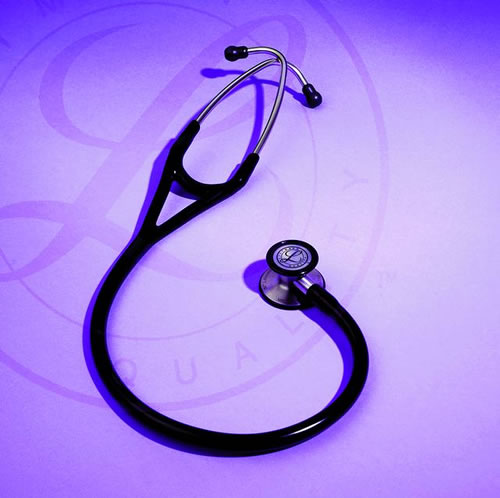
Wednesday, October 18, 2006
Post-ER-shadowing Advice
[Formerly a part of the post Back in the hospital: ER shadowing]
Advice I got from the MSIII at the hospital:
Advice I got from the ER doc I shadowed a couple months ago, and was reiterated by my own personal experience:
And my final piece of advice, from the R1:
Back in the hospital: ER shadowing
School is great so far, but the general basic biology review that comprises our first term is a bit slow and lacking in clinical experience.
Things will brighten up when I get my stethoscope / otoscope / opthalmascope next Tuesday. Also that day, I start my first of four experiences in a family physician's office, which is going to add an exciting element to my medical education.
The doctor I'll be shadowing seems pretty cool, and excited to have us, which is nice. He sent me an e-mail that got me really excited. Part of that e-mail:
In my office, you will be doing more than just talking. I expect you to do limited physical examinations under my supervision. So yes, bring all your instruments. You will also have a chance to do some minor procedures, like giving shots or taking out sutures. In another word, you have to work. Flu shot season is coming up. Hopefully you will be an expert in giving shots by the time you leave.
I hope you will have a good experience and at the same time, have some fun. Books can be very boring.
That's all you need to tell a med student to get them very excited. As well, his practice is about 60% Chinese, "so polish up your Cantonese." And, I don't have to wear a tie. Nice.
Though I'm required to get that experience, I'm still trying to get some more exposure to the specialties I'm most interested in right now, namely, OR and ER. I finally have had enough of trying to smother my itch for clinical exposure and signed up to shadow an ER doc for a couple hours yesterday. Our school has a comprehensive online list of about 100-150 local docs in all sorts of specialties who are happy to have med students to shadow them, so I looked one up, and yesterday found myself wandering towards the big city hospital a short walk away.
I haven't been orientated to that hospital, or any hospital here for that matter, so I wandered in through the paramedic ER entrance, put on my short lab coat in a hallway and wandered over to meet the doc.
The doc I was following looks EXACTLY like a younger, shorter, blond Greg Kinnear. I kept doing double takes all night. He was great to shadow; it was pretty busy and he also had a R1 (first-year resident) and a MSIII (third-year medical student) following him around, but he was happy to have me there.
It's only the second ER I've ever shadowed in, too, so it was neat comparing the two places. This big city hospital had all sorts of neat stuff: a very belligerent HIV+ homeless individual who got drunk on rubbing alcohol and bumped his head and subsequently cussed out the doctor at full volume when the doc tried to get info about his HIV condition; a lady with alpha-1 antitrypsin, sepsis, lung transplant (alpha1 is one of the few conditions we've actually learned something about so far); a 50-year-old Fijian gentleman who had recently had a SEXTUPLE bypass (never heard of that before)!
It was also my first experience with actual teaching-hospital-attending-doc pimping, something I had only heard about to date in the medical blogosphere. The doc asked me a few medical questions, which I wasn't expecting. Fortunately, one of the ones he asked me (why do we give thiamine when we give glucose?) was something I learned this week in class. He seemed almost surprised that I knew the answer.
I enjoyed seeing what the MSIII does, as well. It'll be exciting to finally be on the floors and doing medicine and interviewing patients and doing procedures. He did a great job of presenting cases to the attending; I wonder how some of the people in my class will end up when it comes time for them to coherently present cases. At this point, at least, they don't seem nearly as confident...or competent...as he was.
[Formerly the first half of a longer post; second half can be found at the post Post-ER-Shadowing Advice]
Saturday, August 19, 2006
My First Patient: Mr. Box. Mr. Cardboard Box.
I felt like a nerd being excited to finish up my rotation with a 10:30 pm to 7:00 am shift in the ER.
So, just think how excited I must've been when the doc told me, "If there are any drunks that come in who need to get stitched up, we'll get you suturing tonight."
If there are any words which will guarantee that no more patients will come into the ER, that must be the magic spell. Between 2:00 am and 6:00 am when I went home, we saw two patients. Somewhat unusual for a Friday night.
It's probably a good thing. The rest of the time the doc and I and the nurses all sat around and chatted. Then, I did end up suturing - on a cardboard box - following one-on-one lessons with a physician. It was good to start on something that won't leave a lifelong scar. And I quickly learned that suturing is another one of those things that isn't as easy as a doctor makes it look - it's easy after a bit but you feel like all thumbs for the first few minutes. He also showed me how to hand-tie sutures
I did finally get a view of a patient's fundus using an opthalmascope, though! Well I was excited because I had tried a number of times, unsucessfully. All the more reason to buy an otoscope/opthalmascope set - so far in our registration package we've been told that only about half the class buys one; the other half thinks you can get by without one.
So that's it for me. Back to relaxing for the rest of the summer, until classes start.
I can't wait.
Thursday, August 17, 2006
Learn from someone else's mistake #1: Humour and patients
It feels good to sit down after an 11-hour shift. And, I get to sleep in tomorrow (that's the good news; the bad news is it's because I'm doing a night shift tomorrow starting at 10:30 pm.)
Story time.
As we left the patient, the doctor pointed to a dressing cart and said, "How about you put some gauze and tape on her cut so her dad doesn't have to hold that tissue paper on it."
"Oooh," I thought, "I get to talk to a patient! No doctor in the room! Awesome!"
I collected myself and grabbed a roll of tape and some gauze, and carefully put it on the ninth-grader's wound in a very amateur and untrained fashion that is probably contraindicated in every way and will cause the nurses to shake their heads and mock me under their breath as soon as they seen it. But as I left, I said the fatal line:
"That should keep your dad from having to have his arm up for the next few hours!" Ha, ha, ha, I thought. A few hours. I'm so kind-hearted, cracking a witty joke and keeping these patients smiling.
The reaction was not what I expected.
The girl's eyes went big in horror and shock.
"A few hours?!"
They had been there for hours already and had seen us walk by their room several times to see other patients - likely including patients who arrived after they did. I quickly learned a lesson from the poor girl's reaction to my offhand comment: When it comes to joking around with ER patients, they don't find it funny if you make a joke along the lines that they have a long time left to wait. Most of them have been there long enough just to see a doctor. Unfortunately, they will likely be waiting there for a while longer as they wait for labs and xrays to come back. But don't remind them. Especially in joke form.
I figure that this could be the first of many mistakes that I post here, mine and others (med school classmates beware). Yes, I have come to terms with the fact that I may do two or three things wrong over the course of my medical education. So I'll try to immortalize them as they come along in what could be a great new VM miniseries. And hey, why not just talk about my mistakes? Here's another one. One that I didn't make.
This I learned from the doc I was following: Never give a patient any definite indication of how much longer they'll have to wait. Not that you should avoid the question or lie to them. It's just that things can get crazy. A patient we were seeing was getting antsy to go home, and he asked how long he'd be. The doc explained, "We're going to refer you to a specialist, Dr. Frist. We've paged Dr. Frist, and she always responds to her pages right away, so you shouldn't be here longer than ten or fifteen minutes." On top of all hell breaking loose in the ER, this also marked pretty much the first time that Dr. Frist didn't return a page. I felt really bad when I noticed him still in his bed an hour later and went over to explain what had happened.
Shadowing doctors is great now that I'm a medical student and not just a pre-med. Maybe it's just the docs I'm working with, but I've noticed a difference. Even though what I'm allowed to do is still very limited, the doctors have that much more respect for me. I've had deep conversations with six or eight doctors where they've gone into detail on questions I've asked about about their experiences in med school, lifestyles of various residencies, pros and cons of specialties. One gave me good advice about going the military route to pay for med school. And I've been so surprised by how much they care about my future.
All the stuff they're letting me do is part of that respect. Even though it's just been little stuff like going to a patient on my own and explaining that we'll need to run some more tests, or reducing a dislocated shoulder, or putting on a cast (the last two under close supervision), it's a good feeling when the patient asks why more tests are needed and I can explain, or feeling the shoulder pop back into place, or hearing the patient say "that cast makes my arm feel better already."
It's also a good feeling that I'm no longer just doing the pre-med thing - watching. Instead, I'm practicing. For when I get to do this for real. For a living. It feels good. If I can choose to walk around an ER for "fun" for 11 hours, and still be willing to go back for another helping tomorrow (during a night shift, no less), I think this might be an indication that I've picked the right career.
Wednesday, August 16, 2006
Solemn Questions
Q: What's one way to make a macho, healthy young man cry and wail like a baby?
A: Tell him that the semi truck he crossed the centerline with killed an entire family in the minivan.
I don't recommend doing this. Trust me - it's not fun even just being around when something like this happens.
Talk about dropping a bomb. Just think of the stinging questions that this poor patient must have had swirling around in his head while his body shook with his sobs. "Will I go to jail?" "Are those cops here to arrest me?" "Am I a murderer?" "Will I ever be able to sit behind the wheel of a car again?" "What were their names?" "Where were they going today?" "How old were the kids?"
Who knows - maybe even he wondered,"Will I go to hell?" I'm not trying to be funny. Maybe that does go through the mind of someone who's just been told that it's not just their own blood on their hands. What would you think if you learned you've just snuffed out several other lives in the blink of an eye? That somewhere, sisters and grandparents and aunts and cousins are devestated; they'll be planning a group funeral for a young family? None of them were even sick, none of them should've died today or anytime soon, but they're gone now, all because of you.
Can you imagine having to deal with those questions? And after having to deal with so many other intense questions. "Why am I strapped to a back board?" "Why am I wearing a neck brace?" "Will I ever walk again?" "I make my living driving - will I ever drive again?"
"Are the other passengers hurt?"
That's the one question he asked out loud. Maybe he shouldn't have. Maybe the cop should've waited before he told the patient. Maybe there is no 'ideal' time to tell someone something like that. Here's a question - What's worse, anyways? Dying in a car accident, or living knowing that you killed someone? a bunch of people? And then later trying to get behind the wheel of a car again - to use again something you once turned into a weapon of mass murder?
I've already come to accept the fact that someday soon when I'm finally a doctor I'll be telling family members that their loved ones have passed, or don't have much time left on God's good earth. Not that accepting this fact will make it a walk in the park when that day comes. However, what happened today is one variation of such an event that I didn't foresee. I'm glad I came upon it as an observer, rather than being the informer.
I hope I never have to deal with it again.
Maybe now you can understand a bit that being in the ER for just a couple days has already made me ask more questions about myself.
"Should I really be eating this?" "Do I need to add this much salt?" "Should I choose a safer way to separate these frozen burgers?" "Do I really need to be driving this fast?"
Being in the ER has made me much more careful.
Because I've seen what could happen to me - or what I could do to someone else - if I'm not.



