
One of my biggest mistakes as a pre-med student was not taking advantage of the online medical blogging community. Not every medical student can live beside a doctor for every moment of every day for a month, waking up for every midnight page, to learn if being a doctor is something they would be interested in doing. Reading blogs, however, can be a great substitute for that. You will better understand what being a doctor involves - the good and the bad. You'll learn about the incredible privilege it is to be a physician and the most exciting moments in the OR. You'll also learn about the patients that some doctors want to strangle, such as drug seekers, the patients whose treatment suffers because of drug seekers, and about the other side of those annoying patients from some enlightened physicians and residents who go beyond their frustrations to see these patients for the sick people they are. You'll learn from the mistakes of medical students and read what residents wish they had done differently. You'll read about the anguish that physicians go through when their patients sue them for seemingly nonsensical reasons (some with happy endings). And then you'll be able to think about whether or not you're cut out for those types of things. You'll know for sure if medical school is right for you You'll learn the horrible parts about medical school... and be able to make a more informed decision as to whether or not you think you'll survive. Medical blogs provide amazing insight into what medical school is like, an idea of what medical school exams are like, and how it feels when it's all over. You'll learn what being pimped means and how med students react to it and the subtle, unspoken rules involved. Of course, there's nothing like actually going through it, but you can save yourself years of stress from applying and trying to succeed in medical school if you decide it is not right for you - medical blogs can even help you figure out if maybe you shouldn't be a doctor. You'll learn about how doctors interact with other professions What does a nurse practitioner do, and how do their domains differ from what a doctor does? Before I was in medical school I didn't know anything about interprofessional politics, turf wars, and the potential for amazing things to happen when there is collaboration between doctors and other professions. That's why if you're pre-med, reading medical blogs goes beyond reading just physician blogs. You can read blogs by doctors of every specialty (ER doctors, urologists, surgeons, GPs, oncologists...), medical students and doctors in training from all around the world, nurses of every specialty (ER Nurse, nurse anaesthetist...), other health professionals such as respiratory therapists, and other health care professionals such as medical research blogs, healthcare law, policy, and ethics blogs... and the list goes on. Medblogs can give you a perspective on how these different professions work together in the same problem - see, for example, the story Perspectives, written in three parts: part I by a cop, II by a paramedic, and III by a nurse. As well, by learning about other professions, you'll have a better idea of whether or not their scope of patient care is more along the lines of what your career interests are. You'll learn more about the perspective of a patient Whether or not this helps you get into medical school, this is crucial to becoming a good doctor. There are some fantastic patient blogs that will provide you with fantastic insight into what it is like to live with an illness from many perspectives. Some blogs contain lists of ways to deal with certain patients...a great way to improve bedside manner. Some blogs even have the rare, heart-wrenching glimpse of reading the entire journey of what it is like to be diagnosed with, fight, and even lose a battle with an illness (one of the most memorable blogs I have ever read). Reading stories like those when I was pre-med would have done nothing but amp up my motivation to work hard, so that I could make it to the point where I could meet unbelievably inspiring patients like that in real life. You'll get a chance to have conversations with medical professionals ...which can be a hard thing for pre-meds to arrange face-to-face. Through med blogs, though, you can get involved with the profession in a unique way - by engaging in discussion, leaving comments and e-mailing blogging doctors, I have benifited from get 'face time' and advice from physicians that I could never get elsewhere or in such a short amount of time. You'll get a better idea about medical controversies Did you know some medical professionals don't think fibromyalgia isn't a real disease? or that there are many schools of thought on lyme disease and whether it is over- or undertreated? Reading blog posts on topics like this, and the often inflammatory comments that follow them, will help you learn about such controversies. Better yet, you'll learn how to answer those dang ethical questions Bloggers write about ethical situations all the time. Even if one comes up in your interview that you never heard of before, by reading about many other real-life situations, and reading the comments that other readers provide, you'll become a star at answering those intimidating ethical questions. Check out the Wall Street Journal's Health Ethics Blog posts, or, believe it or not, a Bioethics Blog exists. If, like me, you prefer stories to the more theoretical ethics discussions, though, check out posts by clinicians on ethical dilemmas. Your MCAT mark will triple. Okay, maybe only double. And no, that's not a guarantee. But it might go up a little bit if you find some advice on the MCAT that relates to you, like whether or not you should take an MCAT class. So you're sold now, right? How does someone start reading medical blogs? If you've stumbled upon this post and want to give medical blogs a try, but you aren't sure where to start, check out Vitum's Guide to Medical Blogs for Beginners! Do you have any other advice for pre-med students? You bet. Send a cheque or money order to... just kidding, it's all here. This post was a year in the making... hope you liked it! Use the comments section to let me know if there are any other ways you think reading medical blogs helps pre-medical students!
My excuses not to were stupid. I didn't read medical blogs for the same reasons that I didn't watch medical shows - it wasn't long into a show that I started getting reminded how much I wanted to be in those medical situations, and then I would inevitably end up feeling guilty for watching TV instead of studying.
In retrospect, though, by avoiding blogs I made things a lot more difficult than they needed to be. That's because reading medical blogs can dramatically improve your chances of getting in to medical school.
You'll do better in your interview, improve your essay, learn more about the life of a doctor and whether medicine is right for you, and you could even improve your MCAT score.
You'll do better in your interview
All great speakers use stories to make their speeches memorable and engaging - the same goes for good interview subjects. You'll find this if you critique your friends' interviewing skills, which is one of the most helpful things you can do to prepare for the interview (something that should not be overlooked)...unless they tell you a story that captivates you, you'll tune out within seconds.
A lot of medical blog posts are stories...some of which are extremely well-told. Try as I might to be a fantastic narrator, the sad truth is the further you get from this blog, the better the stories get. Check out the story Memorable Patients, Part 4 at Surgeonsblog for a stunning example.
By reading medical blogs, you'll get in the habit of reading medical stories... and if you tell the really good stories to your friends, you'll also get lots of practice, so when you tell stories from your own medical experiences, your listeners will be captivated. And that is exactly what you want your interviewers to be!
You'll write a better essay
Unlike medical admissions committees with admissions essays, people don't read blogs because they have to. So, even though many bloggers say they may mostly blog for themselves, they usually try to make their posts engaging enough that people will read them...and return for more. If you start to figure out what makes a reader interested in a blog, and can apply it to your essay, you'll be well on your way towards making your essay stand out from a pile of 2,000 admissions essays. Check out some of the most popular medical blogs, as ranked by edrugsearch, which have readers always clamoring for more stories, such as the ones by emergency room nurses, paramedics, and surgeons.
Wait...there's more! Beyond the technical side of being a better interviewee and essay writer, reading blogs will also help you with the content. This comes from a number of things, such as knowing for sure what medicine is all about and if medicine is right for you, and being able to explain to the admissions committee why you are sure of this. Just think about how well-researched you'll sound if an interviewer asks you if you're sure medicine is right for you... and you are able to give them succinct reasons with clinical examples to answer their question. Reading medical blogs can help you do that.
You'll know for sure if vitum medicinus (a life of medicine) is right for you
Tuesday, July 29, 2008
Why should pre-med students read medical blogs? Because they'll help you get into medical school.

Thursday, July 24, 2008
Vitum goes high-tech: Which PDA I chose, and why
Now that clerkship is rapidly approaching many of my classmates and I are
 buying PDAs (personal digital assistants) or smartphones (cell phones that have the capability to load medical software). I ended up doing a ton of research and buying one this week, so I figured I'd save others some time and post what I found...despite the fact that "technical reviews" isn't getting a lot of votes on the poll in the sidebar (because it's not even listed).
If you have one, this review might not be that interesting to you... but please comment with your tips on which PDA medical software I should get! Thanks!
Though some students don't get a PDA and prefer to look things up in books, for me and most of my classmates, getting one isn't really an option. I've heard stories of students who get yelled at by their attendings for not having one... one of whom tried to retort that they just looked up things in pocket reference books. The attending said that was OK as long as the student carried every reference book they had with them at all times... and made the student do that for the day (Sounds like a surgeon to me). And I need a new phone, and I'm a huge nerd.
While in the last few years the classes arranged a large group order of a Palm product, this year that was cancelled due to the large variety of PDAs available, the PDA vs. smartphone the inability to settle on any single one of those options.
So, I was forced to do my own research, something I usually do extensively online before I buy any electronic product, and came up with one that I've now had for a few days and am very happy with. In case you're interested, here's what I came up with with regards to smartphones available in Canada.
THE CONTENDERS
I decided I wanted a smartphone instead of just a PDA, because I didn't like the thought of carrying around a Palm and a cell phone at the same time. With this in mind, I broke down my options into the following:
- The iPhone and Samsung Instinct
- A Blackberry product
- A Palm OS product
- A Windows Mobile product
When looking for a high-tech device to buy, I usually spend several days doing the following:
- reading expert reviews on C-net, PC World and various other cell phone review sites such as PhoneArena
- comparing specifications lists
- finding out what software would be compatible on each phone
- (the most fun part) - reading user reviews at those sites and Amazon, especially the ones that are very critical of the products, as people generally don't hold back when they say what they don't like about a product they spent a lot of money on.
Don't be fooled by the iPhone's music-playing capability: every phone listed here has the basic functionality of e-mail, internet, music, video, texting, phone, calendar, and contact lists. These are by no means complete reviews, just what's relevant to the use of the devices by a medical student. Here's what I found for each product:
>>> iPHONE, SAMSUNG INSTINCT, HTC TOUCH DIAMOND
PROS:
> Style: Needless to say, the iPhone is one of the most hyped-up and aesthetically stunning phones on the market, and you will rarely run out of people interested in your phone. Prepare for attendings to pimp you extra hard as a direct result of their jealousy.> Functionality: With their touch screens you can do much more with these phones than many others, such as rotate and flip flash cards with the Netter's Anatomy flashcards software. Great for preparing for when attendings pimp you on anatomy.
> Size: The iPhone is one of the smallest smartphones out there...but not the smallest.
CONS:
> Compatibility: Not many medical applications are sold for the iPhone yet and none that I know of on the Samsung operating system (which is what the Instinct, a supposed "iPhone killer," will run). Don't get me wrong, there are a few stunning applications and there will undoubtedly be more coming out in the next little while. However, I will probably get the most use out of the reference software at the start of the year, and didn't want to wait for the software to be released.
> Omissions: The iPhone is lacking in some basic things that every other phone has, such as expandable memory, removable battery, picture/video messaging, and even video for that matter. And when it comes to customization, it doesn't let you change very much in terms of system custom hacks, menu option ordering, and the like... if you are a techhy person this might bug you.
> Keyboard: As well, as touchscreen devices these don't have a button keyboard, so your typing speed will be limited since you can't type by feel. Only the Instinct lets you know you've pressed a button by vibrating a little bit.
> Cost: Canada has the second-highest rate plan fees in the world for this device. Your attendings will assume you are rich, and quiz you even harder to make sure you aren't in medicine just for the money.
> It's an Apple product: Baaa.... Who really wants to be a sheep?
>>> BLACKBERRY PEARL, CURVE
PROS:
> Operating System: The amazing stability, speed, and rarity of crashes of Blackberry devices makes it one of the best all-around smartphones available according to most reviews.> E-mail: Blackberry brought e-mail to the palm of peoples' hands way back in the day, and they still remain at the top when it comes to making devices that do this.
> Size: If you go with the Pearl, your smartphone will be the same size as most cell phones. If you go with the Curve, you aren't looking at much bigger.
CONS:
> Compatibility: Again, few medical PDA websites sell software for the blackberry. As well, there aren't many unlimited data plans for the Blackberry. I would have gotten a Blackberry if it weren't for these two issues.
> Music and photos: This is something that Blackberry has added as an afterthought to their primarily e-mail machines, and they have been playing catch-up ever since. But I have been told to not expect to have time to do things like take photos and listen to music during third year.
> The Pearl keyboard: This involves buttons that have 2 letters assigned to each one, something that supposedly takes a bit of getting used to.
>>> PALM TREO, CENTRO
PROS:
> Compatibility: The number one reason to get a Palm is because so much PDA software, medical and otherwise, is made for it. It was theoriginal PDA and as a result medical software has been made for it since the dawn of the PDAges.
CONS:
> Size: The Treo is a brick, which is why I could never justify getting it. Most phones that big at least have wi-fi, but the Treo doesn't even offer that. At least the Centro is small.
> Memory: The Centro has barely any, and so it is very sluggish (but remembers what keys you press when it freezes so they all show up on the screen when it comes back to life...annoying!), and crashes occasionally, which is why I could never justify getting it. It also looks like a toy (especially in the Strawberry Red color option).
> Keyboards: If, and only if, your fingers are the size of toothpicks, you will be able to type very well on the Treo and Centro keyboards. You will probably do very poorly at percussing your patients' abdomens, though.
>>> WINDOWS PRODUCTS: HTC TOUCH, HTC s640, HTC 6800, SAMSUNG JACK, SAMSUNG ACE, MOTOROLA Q9h
There are many more phones in this category, so for some phones the criteria below is a positive thing and for others, it's a negative thing. As a result I've ordered this section a bit differently.
> Stability: Windows Mobile (especially the Professional version, as opposed to the Standard version) tries to be a little computer and so is well-known for its potential to be a memory hog, sluggish, and crash more often than any of the airlines based in the Congo. This can only be overcome by a lot of memory and/or a fast processor.
>>> THE GOOD: HTC s640 (fastest processor, not a ton of memory), Samsung Jack (lots of memory, good processor)
>>> THE BAD: HTC Touch (tries to run the Professional version on very little amounts of memory...bad news) HTC 6800 (I read a review by a doctor who returned his HTC 6800 because it was too sluggish for his medical applications), Motorola Q9h, Samsung Ace> Battery life: Phones which use up a lot of memory can use a ton of battery life.
>>>THE GOOD: Samsung Jack, HTC Touch
>>> THE BAD: HTC 6800, HTC s640, Motorola Q9h, Samsung Ace
> Size: Only one of these phones is a beast.
>>> THE GOOD: Samsung Jack (smaller than the iPhone, actually), Samsung Ace, Motorola Q9h, HTC s640, HTC Touch
>>> THE BAD: HTC 6800. Useful for putting into a burlap sack with a number of unwanted excess kittens before heading to your local river.
> Touch screen: If you need the convenience of a touch screen the HTC 6800 and the HTC Touch are the only two of these devices that offer one. Most of these have scroll wheels to try and make up for it (though the Q9h doesn't).> Keyboard: Don't forget that choosing a keyboard comes down to feel, and anything I write here is trumped by how the phone feels under your fingers.
>>> THE GOOD: HTC 6800 (makes up for its massive size by being the only smartphone that offers a massive keyboard AND a touch screen), Q9h (in my opinion, the best keyboard on any handheld device)
>>> THE MEDIOCRE: Samsung Blackjack (small, but has nice spacing between the keys) Samsung Ace (but the keys are peaked so your fingers rest between the rows), HTC s640 (big keys with little spacing between them)
>>> THE BAD: HTC Touch (has an on-screen keyboard... I am not a fan)> Wi-Fi/Internet: Adds unnecessary bulk. You should be getting an unlimited data plan instead... just as fast and way more portable, and worth the fees to get access to online resources and poke your friends on Facebook between surgeries.
>>> THE GOOD: HTC Touch - uses Bell's mobile browser, which you can get Unlimited for $7/month. Everything else can get unlimited data for about $30.
THE DECISION
Whew! Told you I go all out with the research. So what did I settle on?
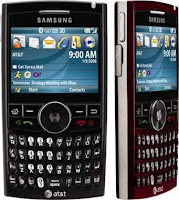
At the end of the day I chose to leave Bell after many years of good service to get the hardware I wanted. I settled on the Samsung Jack (known in America and on the review websites as the Blackjack II) through Rogers, with the (virtually unlimited) 6 GB monthly data plan, a value bundle
 for voicemail and text messaging, and a voice plan. Switching carriers also gave me a bit of extra bargaining power with the salesman when it came to accessories and discounts on my monthly bill. The cost of the product I was getting wasn't a factor - I'd rather pay extra for something good - but on a three-year term, this phone cost me a mere $49.99.
But don't get this phone just because I say it's the best one. It's not. It's the best one for me. Getting a good phone, especially where selection is as limited as it is in Canada, is all about knowing what you want, and knowing what you can live without. It all comes down to compromises.
For me, my absolute must-haves were:
- unfaltering processor speed
- memory
- keyboard
- software compatibility
- tiny size (did I mention it's smaller than the iPhone?)
Based on the selection of phones available, in order to get these features I ended up having to be comfortable giving up:
- the tiny size of the HTC touch
- the touch screen of the iPhone, Palm, and HTC devices
- the large keyboard of the HTC 6800
- any software that only runs on Palm (I think my school has a patient logging software that only runs on Palm)
- the iPhone
SOFTWARE
This is the final thing I am considering for my PDA. I currently have:
- Epocrates (free drug reference)
- Diagnosaurus (free ddx reference)
- 5-minute clinical consult trial version
- Harrisons trial version
- Merck Manual trial version
I am also considering getting Toronto notes and/or a subscription to UpToDate in lieu of (or in addition to) the above software.
However, I would really appreciate any tips or input you can offer regarding which software you would recommend and why.
RECOMMENDATIONS
- When deciding on a PDA, you should decide which features you really want, which things are optional, and which things you can't live without. You should consider if you are looking for:
> Keyboard - large or small? does it feel right to you?
> Fast processor and lots of system memory - do you need tons or are you patient enough to wait for programs to load?
> Compatibility with a wide variety of medical software - is this important to you?
> Stability and customizability of the operating system
> Size - will you put it in a pocket or belt clip? Will you try to put it in your pocket because you are too cool to use a belt clip, and instead have trouble making it through doorways because it is very much of the same size as a cinder block?
> Battery life - how important is it to you that your device make it through the day?
> Carrier / service provider? If you are in the middle of a contract with Bell, Rogers or Telus (the 'big 3') you might not want to pay the fees to break it and switch. Or you may want to stay with who you've got. Or you may like the bargaining power that being able to threaten to switch carriers (or actually switching carriers) will give you. And, your carrier may have a great corporate rate plan through your medical association or hospital.
> Style / pop culture icon status / the need to be a sheep (you know I'm talking about the iPhone)?
> Style, but with the need to be different (ie. the Samsung Instinct)? - After you decide what you are looking for, be ready to make compromises. Not every phone will have all of the features you are looking for. Like I mentioned when I revealed my final decision above, I had to give up a lot to get the features I really wanted.
- Try out the phones you are interested in. This is the only way to know if the keyboard and the feel of the device are right for your fingers. Ask the sales reps to put in the battery and fire them up for you if you are really interested in one, and see what it's like when you open up many applications.
- Don't listen to Disney. When buying a phone, you should go with your head, not your heart. I liked the iPhone and almost impulse bought the HTC 6800 with its huge touch screen and massive keyboard, but after doing my research I know I would have regretted those purchases for the reasons listed above.
Hope this exposé is helpful to you. Please leave comments based on your experience... and about which software I should get!
Monday, July 21, 2008
Sometimes it seems as though the world's greatest people are dealt the worst hands in life
Happy birthday Dad!!!
The flight paramedic I worked with this week started his job the year I was born. He has seen patients of all sorts, at all stages in life, with all sorts of background stories. Yet, the story of the patient we flew into the big city, and what she did right before we loaded her onto the helicopter, he told me later really moved him.... something that means a lot considering how hardened he is and how much he has seen.
Actually, considering the several shifts I've had with the flight paramedics over the years, I have been surprised at how sensitive they are to their patient's needs while serving in a job that could have the tendency to see them slip into the mindset of a courier transporting inanimate packages. Even in the little things. "You're gonna feel a poke here" is something the lab tech should have said (many times) when she was digging to find a vein; instead, it was the paramedics who were keeping an eye out for the patient in that time. Treatment of a patient like a pincushion is something you never want to see... it is even harder to watch when the patient receiving the bludgeoning had been admitted for treatment of a suicide attempt.
But back to this inspiring patient.
It was a sweltering day in the city, and I had been regretting trying to dress nicely to impress the paramedics beacuse in my pants and long-sleeved shirt I was doing more sweating than shadowing. I wished we could stay in the air-conditioned ambulance station at the airport but instead when the pagers went off. I was hoping for an exciting scene response trauma call, but no, we had to head to the helicopter to answer yet another boring transfer call.
Rachel, a 33-year-old mother of two, was being brought in to the big city to see a specialist for a growth in her throat. It hadn't been biopsied, but it was pretty obvious to everyone that it was the cancer coming back.
You see, ten years ago, after a dental procedure, she started having trouble swallowing some foods. She ignored it for a few days because she assumed it was inflammation left over from her root canal, but it didn't go away, and finally looking in the mirror with a flashlight revealed a growth that made her weak at the knees. Her worst fears were confirmed when she was given the diagnosis of cancer.
The tumour grew incredibly fast, and she soon lost feeling in her face, control of her facial muscles, and had to soon start eating through a tube. That seemed like a minor inconvenience when she had to have a tube put into her throat because the tumour was blocking her airway. Surgery was attempted, followed by chemotherapy and radiation, which took the pressue off her trachea and allowed her to breathe again, but left her bedridden.
Then, miraculously, her strength began to come back, and so did the feeling and control in her face. She soon was talking, sitting up, then standing. Nobody seriously expected the day to come when she would leave the hospital, but she did... walking entirely on her own.
Unfortunately, the road to recovery soon came to an end. Three years after that, shortly after the birth of her second son, the cancer relapsed, this time much worse. It had spread to the bones in Rachel's vertebrae, paralyzing her from the waist down. Again, she had to undergo surgery, chemotherapy, and radiation. And, amazingly, against all odds, she again had a complete recovery, more miraculous than the first - all of the feeling and mobility in her legs returned. She could walk again!
It would have been nice if it could end there, but the story goes on, and not in the direction anybody would want for her. Earlier this week Rachel was having dinner with her family when she got some food stuck in her throat and started choking. She was unconscious for some time before anyone could revive her, and the preliminary tests suggest that not only was the cancer returning, but she had lost some cognitive function while her brain was deprived of oxygen.
Right before we picked her up to take her to the big city for some more tests, a few more results came in. It seemed as though the tumour was growing around some crucial arteries and veins, and that surgery would not be able to reach it. Treatment this time around, if any, would likely be palliative.
Despite all of this, she was one of the most genuinely nice people any of us had ever met. She thanked all of the paramedics profusely, and didn't complain about anything. "Thank you for serving me," she said to the paramedic I was shadowing as we took her into the hospital. He replied, "No, you have been the one serving me."
When it comes to life, it seems that sometimes it's the world's greatest people that end up getting dealt the worst hand. I don't know how I would cope if I had to go through everything she had in the past ten years. She truly put a face to courage and grace, and since then I have found myself remembering her every time I think I have it rough with traffic or something else minor in comparison.
Like I said, though, the paramedic told me he was also really moved by something she did right before we loaded her onto the helicopter. As we pulled her out of the ambulance, and were readying the aircraft's stretcher support, she did something that made me regret cursing the sun the whole day. She was strapped in to her stretcher, but her arms were free, and she spread them out and looked into the sky. "It is such a beautiful day," she said. "I love the sun!" And, knowing full well that she would likely be on a cancer ward for the next several weeks or months, and that this could be the last time she would be at home, she added aloud with the most beautiful smile on her face, "And who knows when I'll see it again."
Monday, July 14, 2008
The failed mandate of our family practise course
Our medical school has a strategy to fight the sagging number of doctors choosing family medicine as a profession: expose students to the profession through a mandatory course in family medicine. Unfortunately, if you ask anybody in my class, it's quite apparent this strategy is probably doing more harm than good.
It involves exposing us to family medicine by arranging for us to shadow family physicians for a few hours per week in our first two years, assigning various time-consuming projects, and providing a number of family medicine-related lectures, attendance to which is encouraged (with limited success) more by sending threatening e-mails to the students than by providing interesting topics.
Then, we are given an exam for each of our first four semesters, asking medically relevant minute details from the lectures, such as, "How many people died in Somalia last year?" "Which of the following is an example of grey literature?" and "What does the E stand for in FIFE?" (the latter of which I know quite well after getting yelled at by a patient for using said technique).
I'm not sure who thought making medical students write exams on boring lectures that they've been guilted into attending would develop in us a passion for the field, especially when we're already overwhelmed with the study load for our other courses. It's a good thing we are instead able to develop this passion by spending time with family doctors, right?
Well, it's not that simple. Personally, I lucked out, and ended up with outstanding tutors. I'm among only a few people who had an excellent experience with all my various tutors, getting the chance to regularly see patients on my own and conduct histories and physical exams, and fill out prescriptions, referrals and lab requisition forms.
Unfortunately, for many people in my class, the taste of family medicine they got from this experience is a very bitter one.
First of all, urban family practice is very different from what family medicine used to be. While rural doctors still do a lot of procedures and deliveries, most of the doctors we shadow have cut down on the amount of these extra services, including following patients in the hospital.
Secondly, with the increases in class sizes, only a small number of students are one-on-one with the doctor, and even after grouping students, the faculty is still having a hard time finding
doctors willing to teach.
So, the preceptors they do sign up aren't all doing it out of a love for teaching, and the students suffer for it. Two students that I know spent most of their shifts with one physician sitting at the end of a hallway, called in only once to see patients. Two others I know spent a semester watching the doctor perform alternative medicine such as waving his hands over the patient (all of which he billed the government for), and they even spent a whole shift punching out pieces of aluminum foil, to build up the doctor's supply of tinfoil confetti to tape on to patients' hands as an (undoubtedly ineffective) alternative medicine method.
However, despite the lectures, exams, and poor shadowing experiences, the course is by no means a complete failure. Some students, like myself, have a fantastic experience with the doctors, getting to do and see a lot, including surgeries and infant deliveries. And even if it didn't convince anybody to become a family doctor, the amount of clinical and patient experience we got will give us a step up for when we start our medical student internships in the fall.
Additionally, the course also gave us the chance to practice a few office procedures, such as prescription writing, suturing, biopsies and excisions, which is the fun 'doctor stuff' that everyone looks forward to in med school. Unlike the medical students from some Canadian schools, though, we never got the chance to learn how to place IVs in our first couple years of med school.
As well, everybody in the class was exposed to the huge variety of sub-specialties of family practice that exist when we spent time with two specialized family physicians. Family doctors can tailor their practices with a focus in prenatal care, oncology, surgical assist, inner city medicine, emergency, hosptialist, sports medicine, and many other fields, something I didn't know before med school, and a realization that definitely piqued my interest as I search for a specialty that satisfies my desire for variety.
Finally, the rural exposure component of the course is one that is apparently a lot of fun. After two years of medical school, we get the chance to spend some time in a rural community, an experience I'm looking forward to right before I start my third year. This is evidently one of the redeeming factors for this course, and hopefully when I'm shipped out, I'll have a few interesting stores to share... and not spend the whole time punching out tinfoil confetti.
Saturday, July 12, 2008
Blinded by the silver lining
As I've mentioned before, some people seem to be much more willing to open up to you about their medical details when they hear you're a medical student. Often this involves unpleasant details, such as elaborate depictions of fungating lesions and uncontrollable bodily functions. Once in a while, though, I get a response I don't expect.
I was at a coffee shop a couple weeks back - to relax, not refuel, unlike during the school year - and was served by a cashier whose competence at baristing I immediately called into question. After she dropped a few things, had difficulty counting out my change, and made something other than what I ordered, I admittedly made some silent judgments about her intelligence too, which I assumed were related to the lack of natural pigment in her hair.
It was a slow day, and so when I went to return my dish before I left, she started making conversation. "You're a student around here you said? What are you studying?" "I'm taking medicine," I replied, and braced myself for the "Oh, let me show you this rash" or something of the sort.
"Oh, neat, do you know much about Alzheimer's disease?" she asked. "My dad has had that for the last seven years or so. It's pretty interesting, isn't it, with the tau protein deposits and the beta amyloid plaques, and all that."
I think my jaw noticeably dropped. She wasn't so blonde after all!
She went on to impress me with the other things she had learned about the disease, and talked about how she had moved in with her dad to take care of him when he got considerably worse, so that he wouldn't have to go to an old age home. She had left her job as an accountant and found the coffee shop gig which didn't require her 9-5; that way, she could spend more time with him.
Alzheimer's is a terrible disease. Many people get upset as it ravages the cognizance of their loved ones, feeling as though they can only stand by helpless as the person they love is taken away from them, a bit at a time, leaving an empty shell of the personality they once knew. Some even choose to not deal with the stress of the disease by moving their parents to an old age home and not bother visiting.
With this in mind, I asked, "that must have been difficult, I imagine, watching him change so much over the years?"
Her response to that question surprised me even more.
"No, no! It's the best thing that could have happened. You see, as he loses more of his memory, he's been becoming more and more like a child. Now we hang out and make jokes and play in the backyard like kids, and have so much fun. If it were a heart attack or a stroke that took him, then it would be instantaneous - I wouldn't have the chance to say goodbye. This way, though, it's been slow... and so I have had many years to accept that he'll no longer be with me soon, and I've been able to say goodbye."
Not only did I learn once again to not judget a book by its cover, but I also got the chance to see someone who embodied the "acceptance" phase of grief more than I had ever seen before. Perhaps it was because I was expecting her experience to be the same as the others I'd heard of, that she was full of anger at the situation because she had to watch this disease degrade her father to the point that he now is fully dependent on support from others. Instead, she embraced it. The amount of positivity she had for a disease so ruthless was truly inspiring.



