Showing posts with label residency. Show all posts

Thursday, July 24, 2008

Vitum goes high-tech: Which PDA I chose, and why

---
UPDATE - April 27, 2009 - Why I returned the PDA I chose!!!
---

Now that clerkship is rapidly approaching many of my classmates and I are The Samsung Instinct (no, not the one I bought)buying PDAs (personal digital assistants) or smartphones (cell phones that have the capability to load medical software). I ended up doing a ton of research and buying one this week, so I figured I'd save others some time and post what I found...despite the fact that "technical reviews" isn't getting a lot of votes on the poll in the sidebar (because it's not even listed).

If you have one, this review might not be that interesting to you... but please comment with your tips on which PDA medical software I should get! Thanks!

Though some students don't get a PDA and prefer to look things up in books, for me and most of my classmates, getting one isn't really an option. I've heard stories of students who get yelled at by their attendings for not having one... one of whom tried to retort that they just looked up things in pocket reference books. The attending said that was OK as long as the student carried every reference book they had with them at all times... and made the student do that for the day (Sounds like a surgeon to me). And I need a new phone, and I'm a huge nerd.

While in the last few years the classes arranged a large group order of a Palm product, this year that was cancelled due to the large variety of PDAs available, the PDA vs. smartphone the inability to settle on any single one of those options.

So, I was forced to do my own research, something I usually do extensively online before I buy any electronic product, and came up with one that I've now had for a few days and am very happy with. In case you're interested, here's what I came up with with regards to smartphones available in Canada.

THE CONTENDERS

I decided I wanted a smartphone instead of just a PDA, because I didn't like the thought of carrying around a Palm and a cell phone at the same time. With this in mind, I broke down my options into the following:


  • The iPhone and Samsung Instinct
  • A Blackberry product

  • A Palm OS product

  • A Windows Mobile product
THE RESEARCH

When looking for a high-tech device to buy, I usually spend several days doing the following:


  • reading expert reviews on C-net, PC World and various other cell phone review sites such as PhoneArena

  • comparing specifications lists

  • finding out what software would be compatible on each phone

  • (the most fun part) - reading user reviews at those sites and Amazon, especially the ones that are very critical of the products, as people generally don't hold back when they say what they don't like about a product they spent a lot of money on.
THE RESULTS

Don't be fooled by the iPhone's music-playing capability: every phone listed here has the basic functionality of e-mail, internet, music, video, texting, phone, calendar, and contact lists. These are by no means complete reviews, just what's relevant to the use of the devices by a medical student. Here's what I found for each product:

>>> iPHONE, SAMSUNG INSTINCT, HTC TOUCH DIAMOND


PROS:

> Style:
Needless to say, the iPhone is one of the most hyped-up and aesthetically stunning phones on the market, and you will rarely run out of people interested in your phone. Prepare for attendings to pimp you extra hard as a direct result of their jealousy.
The iPhone (duh)> Functionality: With their touch screens you can do much more with these phones than many others, such as rotate and flip flash cards with the Netter's Anatomy flashcards software. Great for preparing for
when attendings pimp you on anatomy.
> Size: The iPhone is one of the smallest smartphones out there...but not the smallest.

CONS:

> Compatibility:
Not many medical applications are sold for the iPhone yet and none that I know of on the Samsung operating system (which is what the Instinct, a supposed "iPhone killer," will run). Don't get me wrong, there are a few stunning applications and there will undoubtedly be more coming out in the next little while. However, I will probably get the most use out of the reference software at the start of the year, and didn't want to wait for the software to be released.
> Omissions: The iPhone is lacking in some basic things that every other phone has, such as expandable memory, removable battery, picture/video messaging, and even video for that matter. And when it comes to customization, it doesn't let you change very much in terms of system custom hacks, menu option ordering, and the like... if you are a techhy person this might bug you.
> Keyboard: As well, as touchscreen devices these don't have a button keyboard, so your typing speed will be limited since you can't type by feel. Only the Instinct lets you know you've pressed a button by vibrating a little bit.
> Cost: Canada has the second-highest rate plan fees in the world for this device. Your attendings will assume you are rich, and quiz you even harder to make sure you aren't in medicine just for the money.
> It's an Apple product: Baaa.... Who really wants to be a sheep?


>>> BLACKBERRY PEARL, CURVE


PROS:

> Operating System:
The amazing stability, speed, and rarity of crashes of Blackberry devices makes it one of the best all-around smartphones available according to most reviews.
Blackberry Curve> E-mail: Blackberry brought e-mail to the palm of peoples' hands way back in the day, and they still remain at the top when it comes to making devices that do this.
> Size: If you go with the Pearl, your smartphone will be the same size as most cell phones. If you go with the Curve, you aren't looking at much bigger.

CONS:

> Compatibility:
Again, few medical PDA websites sell software for the blackberry. As well, there aren't many unlimited data plans for the Blackberry. I would have gotten a Blackberry if it weren't for these two issues.
> Music and photos: This is something that Blackberry has added as an afterthought to their primarily e-mail machines, and they have been playing catch-up ever since. But I have been told to not expect to have time to do things like take photos and listen to music during third year.
> The Pearl keyboard: This involves buttons that have 2 letters assigned to each one, something that supposedly takes a bit of getting used to.


>>> PALM TREO, CENTRO


PROS:
> Compatibility:
The number one reason to get a Palm is because so much PDA software, medical and otherwise, is made for it. It was the Palm Treo 700wx, not to be confused with the 750, the 755, the 680 or the plain old 700original PDA and as a result medical software has been made for it since the dawn of the PDAges.

CONS:
> Size:
The Treo is a brick, which is why I could never justify getting it. Most phones that big at least have wi-fi, but the Treo doesn't even offer that. At least the Centro is small.
> Memory: The Centro has barely any, and so it is very sluggish (but remembers what keys you press when it freezes so they all show up on the screen when it comes back to life...annoying!), and crashes occasionally, which is why I could never justify getting it. It also looks like a toy (especially in the Strawberry Red color option).
> Keyboards: If, and only if, your fingers are the size of toothpicks, you will be able to type very well on the Treo and Centro keyboards. You will probably do very poorly at percussing your patients' abdomens, though.


>>> WINDOWS PRODUCTS: HTC TOUCH, HTC s640, HTC 6800, SAMSUNG JACK, SAMSUNG ACE, MOTOROLA Q9h


There are many more phones in this category, so for some phones the criteria below is a positive thing and for others, it's a negative thing. As a result I've ordered this section a bit differently.

> Stability:
Windows Mobile (especially the Professional version, as opposed to the Standard version) tries to be a little computer and so is well-known for its potential to be a memory hog, sluggish, and crash more often than any of the airlines based in the Congo. This can only be overcome by a lot of memory and/or a fast processor.
>>> THE GOOD: HTC s640 (fastest processor, not a ton of memory), Samsung Jack (lots of memory, good processor)
>>> THE BAD: HTC Touch (tries to run the Professional version on very little amounts of memory...bad news) HTC 6800 (I read a review by a doctor who returned his HTC 6800 because it was too sluggish for his medical applications), Motorola Q9h, Samsung Ace

HTC 6800> Battery life: Phones which use up a lot of memory can use a ton of battery life.
>>>THE GOOD: Samsung Jack, HTC Touch
>>> THE BAD: HTC 6800, HTC s640, Motorola Q9h, Samsung Ace

> Size: Only one of these phones is a beast.
>>> THE GOOD: Samsung Jack (smaller than the iPhone, actually), Samsung Ace, Motorola Q9h, HTC s640, HTC Touch
>>> THE BAD: HTC 6800. Useful for putting into a burlap sack with a number of unwanted excess kittens before heading to your local river.

> Touch screen: If you need the convenience of a touch screen the HTC 6800 and the HTC Touch are the only two of these devices that offer one. Most of these have scroll wheels to try and make up for it (though the Q9h doesn't).

HTC Touch> Keyboard: Don't forget that choosing a keyboard comes down to feel, and anything I write here is trumped by how the phone feels under your fingers.
>>> THE GOOD: HTC 6800 (makes up for its massive size by being the only smartphone that offers a massive keyboard AND a touch screen), Q9h (in my opinion, the best keyboard on any handheld device)
>>> THE MEDIOCRE: Samsung Blackjack (small, but has nice spacing between the keys) Samsung Ace (but the keys are peaked so your fingers rest between the rows), HTC s640 (big keys with little spacing between them)
>>> THE BAD: HTC Touch (has an on-screen keyboard... I am not a fan)

> Wi-Fi/Internet: Adds unnecessary bulk. You should be getting an unlimited data plan instead... just as fast and way more portable, and worth the fees to get access to online resources and poke your friends on Facebook between surgeries.
>>> THE GOOD: HTC Touch - uses Bell's mobile browser, which you can get Unlimited for $7/month. Everything else can get unlimited data for about $30.


THE DECISION

Whew! Told you I go all out with the research. So what did I settle on?

At the end of the day I chose to leave Bell after many years of good service to get the hardware I wanted. I settled on the Samsung Jack (known in America and on the review websites as the Blackjack II) through Rogers, with the (virtually unlimited) 6 GB monthly data plan, a value bundle Behold, the Samsung Jackfor voicemail and text messaging, and a voice plan. Switching carriers also gave me a bit of extra bargaining power with the salesman when it came to accessories and discounts on my monthly bill. The cost of the product I was getting wasn't a factor - I'd rather pay extra for something good - but on a three-year term, this phone cost me a mere $49.99.
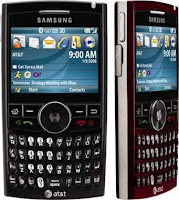
But don't get this phone just because I say it's the best one. It's not. It's the best one for me. Getting a good phone, especially where selection is as limited as it is in Canada, is all about knowing what you want, and knowing what you can live without. It all comes down to compromises.

For me, my absolute must-haves were:


  • unfaltering processor speed
  • memory
  • keyboard
  • software compatibility
  • tiny size (did I mention it's smaller than the iPhone?)

Based on the selection of phones available, in order to get these features I ended up having to be comfortable giving up:

  • the tiny size of the HTC touch
  • the touch screen of the iPhone, Palm, and HTC devices
  • the large keyboard of the HTC 6800
  • any software that only runs on Palm (I think my school has a patient logging software that only runs on Palm)
  • the iPhone
For me, that wasn't a bad compromise - I'm very happy. For you, however, your priorities are probably very different, and so . Hopefully what I found and listed here will help you find out which phone matches your priorities.

SOFTWARE

This is the final thing I am considering for my PDA. I currently have:


  • Epocrates (free drug reference)
  • Diagnosaurus (free ddx reference)
  • 5-minute clinical consult trial version
  • Harrisons trial version
  • Merck Manual trial version
By the way, what is the difference between Merck and Harrisons? or are they two versions of the same thing?

I am also considering getting Toronto notes and/or a subscription to UpToDate in lieu of (or in addition to) the above software.

However, I would really appreciate any tips or input you can offer regarding which software you would recommend and why.


RECOMMENDATIONS

  1. When deciding on a PDA, you should decide which features you really want, which things are optional, and which things you can't live without. You should consider if you are looking for:

    > Keyboard - large or small? does it feel right to you?
    > Fast processor and lots of system memory - do you need tons or are you patient enough to wait for programs to load?
    > Compatibility with a wide variety of medical software - is this important to you?
    > Stability and customizability of the operating system
    > Size - will you put it in a pocket or belt clip? Will you try to put it in your pocket because you are too cool to use a belt clip, and instead have trouble making it through doorways because it is very much of the same size as a cinder block?
    > Battery life - how important is it to you that your device make it through the day?
    > Carrier / service provider? If you are in the middle of a contract with Bell, Rogers or Telus (the 'big 3') you might not want to pay the fees to break it and switch. Or you may want to stay with who you've got. Or you may like the bargaining power that being able to threaten to switch carriers (or actually switching carriers) will give you. And, your carrier may have a great corporate rate plan through your medical association or hospital.
    > Style / pop culture icon status / the need to be a sheep (you know I'm talking about the iPhone)?
    > Style, but with the need to be different (ie. the Samsung Instinct)?
  2. After you decide what you are looking for, be ready to make compromises. Not every phone will have all of the features you are looking for. Like I mentioned when I revealed my final decision above, I had to give up a lot to get the features I really wanted.
  3. Try out the phones you are interested in. This is the only way to know if the keyboard and the feel of the device are right for your fingers. Ask the sales reps to put in the battery and fire them up for you if you are really interested in one, and see what it's like when you open up many applications.
  4. Don't listen to Disney. When buying a phone, you should go with your head, not your heart. I liked the iPhone and almost impulse bought the HTC 6800 with its huge touch screen and massive keyboard, but after doing my research I know I would have regretted those purchases for the reasons listed above.

Hope this exposé is helpful to you. Please leave comments based on your experience... and about which software I should get!


---
UPDATE - April 27, 2009 - Why I returned the PDA I chose!!!
---

Read the rest of this entry »


Tuesday, March 20, 2007

Pimped, finally.

Unlike the impression you may have gotten from reading this blog, not everything in med school is rosy and wonderful.

I've finally had one of the dreaded 'pimping' experiences that I've heard so much about.


For those of you who don't know what 'pimping' is, it refers to the age-old practice in medicine where a medical professional will ask a difficult question of someone lower on the medical education pecking order than themselves. From what I've learned, the pecking order goes something like this: chief of medicine > department chief > attending > fellow > resident > intern (archaic term for a first-year resident) > clerk (third or fourth-year medical student) > medical student > pre-med volunteer. The pre-meds have nobody to pick on. Some of them try to pick on nurses. They don't go far, rightly so.

The smarter docs know that nurses transcend the pecking order... after all, who do you think knows more about emergency medicine, the resident in his second year of an ER residency, or the underappreciated traige nurse who has worked in that ER for thirty-five years? Again, you get it. Kids, respect your nurses.

True 'pimping' relies on the art of progressively difficult questions: if you get a question right, then you will be asked a harder question; if you get that one right, then you will be asked yet a harder question, on and on until you answer one wrong and look like a fool. Pimping. You get it.

Anyways, we are learning about the cardiac examination right now, and we go to clinical skills practice rooms in various hospitals in small groups, and are set up with a tutor, an M.D., who is supposed to train us about the basic cardiac exam.

All is well and good, until we match with this guy, who took it up on himself to drill us like there was no tomorrow. Rather than let us practice on the patient, he simply asked us question after question after question. We all ended up feeling like a bunch of idiots.

Okay, it wasn't too bad the first time. At that point it was actually helpful. You see, I didn't know my stuff when I went in there and the whole time I was thinking, "I should have done the pre-reading." At the time, I didn't even know that he was in actuality asking us stuff way beyond what we had to know for this intro session.

So, knowing that I would have him as my tutor for one more session, I went home and studied. Boy, did I study. I won't make that skip-the-prereading mistake again.

Move ahead to week two. He quickly realized that since last time, we'd all studied, and knew our stuff. Fair enough. However, rather than follow his instructions which probably said something like "Teach these young 'uns the basic steps of the basic cardiology physical examination," he decided to get intimidated.

So, he started asking us progressively difficult questions about the material. Once he realized we knew all those answers, he started talking about things that people only learn in fourth year or cardiology residencies. Or, better still, he'd ask an ambiguous question, then feel happy when we got it wrong...strictly because we couldn't understand what he was getting at.
It began right near the start of the 2-hour session. "Vitum, what is pulsus paradoxus?" he asked, reading off my name tag. Question 1.

He picked the wrong guy to ask about Latin phrases. Apparently he doesn't know I take a fancy to them.

"Latin for paradoxical pulse," I replied, feeling brilliant (shut up, I know it's an easy one). "Refers to the difference between systolic blood pressure between inspiration and expiration."
I was unfazed. So was he.

Dr: "How does it change with breathing?"
Question 2. Serial questions. I could see he was pimping. I was game. I had studied this.

Me: "The systolic pressure increases with expiration, and decreases with inspiration."

Dr: "What's the normal difference?"

Question 3.

Me: "If the difference between inspiration and expiration exceeds the normal physiological variable range of approximately ten milimeters of mercury, the pulsus paradoxus is considered abnormal."

Dr: "What major condition does it indicate?"

Question 4.

Me: "Cardiac Tamponade."

At this point I was pretty glad I had studied for this. It was in our notes. Still fair game. He was getting a little agitated that I knew the answers but wasn't going to let it show.


Dr: "What is cardiac tamponade?"

Question 5.

Me: "When blood fills the pericardial space."

Dr: "What does result in?"

Question 6.

Me: "Difficulty for the heart to contract?" I was starting to feel a little unsure.

His face lit up like he had chanced upon a dancing leprechaun in a forest.

"Actually, that is wrong. When there is cardiac tamponade, it becomes difficult for the heart to relax."
Dammit. I knew that. This two-hour session was starting to feel like a whole day.

Still, he wouldn't let up. He had to prove that I was still the student and he was still the teacher, and ask me one more question. One question that was so vague that I couldn't possibly get it right.

Dr: "What is that effect?"

Question 7. I had no idea where he was going. He could be asking about the effect on anything. I asked him to clarify, and he mumbled something that didn't help, so I ventured a guess: "Increased afterload?"

Dr: "Ummm....", he replied, apparently surprised that I knew what afterload was, or never having considered the effect of cardiac tamponade on the afterload of the heart; probably the former. "Uh... no, that's not correct." Dammit, I knew that one too. I should have thought about that a bit more and realized that wasn't the case. I was nervous. I hadn't been pimped before. It wasn't fun anymore.

He went on. "Preload would be decreased. But what I was referring to is the ..." ...and on he went, explaining some advanced pathophysiology of cardiac tamponade, something that we definitely haven't been taught yet and aren't supposed to know in our basic intro to cardiac exam. I tried to understand, but couldn't.

I know what you're thinking. "Doctors should know this stuff." I'm not disagreeing with that; we should learn this stuff. But you see, we aren't supposed to learn it all at once. Our faculty knows that it will be overwhelming to learn everything in first year. T
hat's why they made med school four years.

In fact, they clearly wrote in the course manual for today's session of this clinical skills course, and I quote: "Understanding the reasons for performing cardiac manoeuvres requires an appreciation of the underlying physiology of the manoeuvres and the pathophysiology of the murmurs that they affect" and that this is "beyond the scope" of this first-year course.

Which is why they provide a list of what we do need to know now, and a separate list of what we do need to know by fourth year. Right there in the book. So, when he decides to ask us about Osler's nodes and Janeway lesions, we know we aren't expected to know those things until fourth year. And when he decides to drill us on things like frikkin' leg-elevation and amyl nitrite auscultation maneuvers, we can see right in our book that he's pulling stuff that we don't have to know until a residency in cardiology, let alone before we graduate.

But aside from all that, this guy clearly wasn't asking us questions for our benefit. He was taking pleasure in putting us on the spot and watching us squirm. When, other than in boot camp and in horror stories of medical residency in decades past, is that okay? I doubt that's how Michelangelo learned from his instructor. We probably wouldn't have the Mona Lisa if he did. (I'm just kidding. I know my art history...Leonardo da Caprio panted the Mona Lisa).

I thought about calling this doc out on some stuff that I knew he was doing wrong ("shouldn't we inspect the hands and feet for cardiovascular signs such as clubbing or pitting edema before we look at head and neck and do the jugular venous pressure?"). He probably would have just shot me down.

In fact, he did shoot someone down when she called him out. "Why do we roll someone into the left lateral decubitus position when we auscultate?" he asked. "Mitral stenosis," she answered. "Nope," he replied. "I was referring to aortic stenosis." In disbelief, she double-checked what she had just read in our course manual. Sure enough, it says, "Mitral stenosis is an example of a murmur that is more easily appreciated in the left lateral decubitus position." She didn't bother to try and correct him.

Later on, he told us about "IHSS" and how it stands for Idiopathic Subaortic Hypertrophic Stenosis. Even if that is the proper term for it, his abbreviation letters didn't match up with his term. Idiot. I didn't bother being 'that guy' who says "don't you mean ISHS?"

The worst part was, even though we might have learned something had he talked slower and brought it down to our level, at the end of the day, we never accomplished the single objective of the entire session: practicing on the volunteer patient.

Listen, man, a little constructive criticism: Clearly you know your stuff. We expect that. You're a cardiologist. But, there is no need to show off here. And, don't take it personally when we know the answers to your first-year level questions. Instead of responding by asking us third- and fourth-year level questions that we haven't studied and will just confuse us, maybe try encouraging us.

If you're incapable of doing that, then how about you let us actually practice our skills on the volunteer patient, who has given up their afternoon so we can practice, and which is why we're actually here. They're getting bored of laying there and listening to you lecture, too.

Oh, and P.S. - the big yellow letters that say "Roll Up the Rim Contest" on your coffee cup mean that you should roll up the rim before you discard it on the counter. I rolled it up after you left and won a prize.

Boo-yeah. I feel better now.

Read the rest of this entry »


Saturday, January 06, 2007

Observing Brain Surgery, or, "I can see it thinking!"

As soon as my classes ended on that specially marked day in my calendar, I headed from school towards the hospital. On the bus, I paged the doctor who had replied affirmatively to my e-mail shadow request, as per his directions. I was lucky to have had case-based learning that morning; our small group tutor was an MD who worked at that hospital and was happy to explain how to page the surgeon, a medical procedure I had not yet been trained in. I paged him, and got no reply, so I called his office and his friendly secretary with the British accent told me that he was in operating room 19, and gave me the extension for the phone in the OR.

After debating in my mind whether or not it was appropriate to actually call the OR, I finally worked up the courage to phone. A very friendly voice answered and after I introduced myself and explained that Dr. Otto had agreed to let me shadow, the voice identified itself as Dr. Otto's resident. "We're in OR 19, come on up." I explained that I had never been to the operating rooms in that hospital before. "Fine, that's no problem, page me when you get here at 35-26104, and we'll get you up here." After I hung up I felt a little embarrassed for being nervous to call, but I was relieved that I had chanced upon a friendly member of the health care profession, and that I had chanced upon him between surgeries.

As per his directions, I paged him from the info desk in the lobby of the hospital, and waited for fifteen minutes. No reply. I knew the OR was on the 4th floor, so I decided to go find it on my own, not bothering to waste my time asking the info desk staff, "How do I get into Operating Room 19?" I assumed that they aren't there to answer such questions for people who seem to be members of the general public, as I probably did.

My decision to search for OR 19 on my own led to what must have been the oddest part of the afternoon for me: one minute I perceived myself looking like a random person off the street wandering through the hospital where I didn't necessarily belong, and the next minute, I was wearing scrubs and a mask, standing in an operating room and looking at a living person's brain.

While I was making my way to the OR, pointed in the right direction once or twice by helpful nurses and hospital staff after explaining who I was and ready to brandish my "this bumbling person is a doctor in training" credentials, I became very appreciative of my extensive experience in operating rooms during my pre-med trip to Nigeria. Had I not learned the rituals and rules of the operating rooms in Nigeria, and had I gone trying to find my way into the OR without this experience, I could very well have busted into the OR after maybe trying to scrub in like I'd seen surgeons do on TV, wearing my street shoes and lacking a hairnet or mask. Fortunately I had been briefed on OR rituals long ago and knew to slip on some shoe covers, put on a surgical cap, and find where they kept the masks, and that observers don't spend five minutes at a sink brushing all surfaces of their hands, fingernails, wrists and forearms. Scrubbing is only for the people lucky enough to be assisting or operating, not observing, and I would not be offered the opportunity to assist my first time watching neurosurgery. This was entirely fine with me, and I assume the patient as well.

When I got into the OR, Dr. Otto, the neurosurgeon was incredibly friendly. He greeted me cheerfully, and after the surgery was well underway he was happy to provide the odd clinical tidbit here and there. "Come look, Vitum, here's the cerebellum... pulsating... as it should." Wow, I thought. I can see it thinking. It wasn't moving rhythmically like a large vessel with blood being pumped through it at regular intervals; instead, it almost looked alive, like a jellyfish or the head of an octopus undulating gently and peacefully within a protective layer of bone that had been chipped away to reveal its hiding place. "What happens to the bone after the surgery? Does it grow back?" I asked. "Nope." I pictured this person recovering with a soft spot in the skin on the back of their head, where they could poke their brain through the skin and muscle using their finger, and presumably affect their balance or other functions associated with the cerebellum.

As interested as I had been in surgery after my time in Nigeria and before observing the brain surgery, I soon became impressed by how bored I was with the procedure. There was a lot of waiting on my part; a lot of meticulous cauterizing (burning) of blood vessels in the process of removing the two tumours, each smaller than a walnut; a lot of slow cutting and bone chipping before that; and a lot of slow sewing after that.

So, to not spend my time craning my neck around the operating doctor and assisting resident and observing clerk (third-year medical student), I spent a fair bit of time chatting with the other members of the health care education hierarchy who were coming in and out of the room. The clerk on rotation in surgery took me over to the X-ray monitors in the corner of the OR, and spent some time explaining the basics of looking over and presenting an X-ray. "First make sure it's the right patient. Then, check the date. Comment on the other things in the X-ray; ECG wires, or chest tubes and the like. Move on to the quality of the film; if you can see the vertebrae distinctly it's a good exposure." He continued on through the art of presenting an X-ray, using a film from a surgical patient from earlier in the day who had developed acute pulmonary edema. I was excited when this condition was mentioned in lecture a few days later, and I already knew what it was from my time shadowing in the OR.

The neurosurgery resident was very chatty and also friendly, as I had experienced on the phone. He told me that a prerequisite of being accepted into the neurosurgery residency is that you have to have a girlfriend before you start, because you sure as hell won't have time to meet a girl while you're a neurosurgery resident. I actually ran into him in the ER when I was shadowing another ER doc a couple weeks after I shadowed brain surgery; at first I knew that I knew him from somewhere but didn't know exactly who he was until shortly after he started talking to me. Honestly, I would probably have recognized him sooner had he been wearing a surgical mask.

Another resident in the room, an Asian doctor who was in a residency in interventional radiology or something of the sort, and she recounted a story of how difficult it is for female doctors to pick up guys. "A friend and I were at a bar, having a great conversation with a cute guy. He asked us what we do, and I replied, 'I'm in medicine.' He asked what specifically, and I replied, 'I'm a doctor.' At that point, he literally turned around 180 degrees and started a conversation with another girl." I told a friend in second year about this. She told me that "we call that the 'M-bomb', telling someone we're in medicine. I get around that by telling potentials that 'I am in science; I'm interested in becoming a doctor someday.' That seems to intimidate a lot less."

The neurosurgeon and I even had a good chat. I was able to pass on a message from someone else in my class, that he had influenced her to enter medicine when he gave a talk to a group of pre-meds she was in a few years back.

I even cracked a joke that made the whole OR laugh; they were talking about how rich the two creators of YouTube must be now that Google had bought their little website for 2 billion dollars. I piped up, "Yeah, but they have to split it..."

I didn't have a conversation with the anesthesiologist, but he successfully perpetuated my stereotype of what anesthesiologists do during surgeries, as he was busy working on a PowerPoint presentation on his iBook laptop computer. That will be added to my anesthesiology stories of members of that profession who do crossword puzzles, sudoku, nap, or perform yoga on a mat in the corner of the OR during surgery. "It's ok if they fall asleep," my medical student friend told me; "their alarms will wake them up if something goes wrong, and the surgeons wake them up if it's time to close."

After standing around chatting for so long, checking up on the previous surgical patient who ended up with pulmonary edema, and coming back to the OR and chatting some more, I decided to call it quits. I said my farewells, and was welcomed by the surgeon to join him again at any time, but I'm not so sure anymore if surgery is for me.

I was told by an anesthesiologist that one way to categorize medical specialties is into two types: those that have you do one thing, finish it, and move on to the next, versus those that handle you juggling several balls at once. Surgery and anaesthesiology would fall under the former. I think I'm leaning more towards the latter. Fortunately I've got lots of time to decide for sure. But, I don't think that brain surgery will be something I find myself doing as a career.

Read the rest of this entry »


Monday, November 27, 2006

Milestone: First Dinner Paid For by a Pharmaceutical Company

I went to a Resident's Research night the other night at a fancy business club downtown. I was attracted by the possibility of the free cocktails, the free gourmet dinner, the experience of seeing this fancy club for free, and not one bit by the free research speech in between.

We arrived, suitably conforming to the club's dress code, and were pointed to a conference hall in the public area of the club. I never did get to see the private member's area with the billiards tables and the swimming pool and the brandy and stacks of the Wall Street Journal. Strike 1.

After that, the first thing we noticed is that there was a price list beside the bar. By "Cocktails 6:30 - 7:00" on the invitation, they meant "Cash Bar 6:30 - 7:00." BIG difference. Strike 2.

At the end of the speech, though, which was mostly out of my league (but it kept my attention because the resident spoke so fast) they served a fabulous and delicious three-course dinner with all the wine we could drink. Outstanding. Reset the count; 0 balls, 0 strikes.

And the best part: right before they served it, they told us that a pharmaceutical company was paying for the dinner. I had been wondering how long it would be before I was getting food from the drug companies; my time had come. I have pretty much arrived. (And I don't feel coerced one bit: to be honest, other than mentioning the name once, they did a bad job of making an impression. I can't even remember the name of the drug company. That makes it OK, then, doesn't it?)

It was well worth going just for the (free) dinner, but the best part happened after dinner. Two young psychiatrists came and sat down at the table where I was sitting with about five other first-years from my class. They told us a lot about psychiatry, answered our naïve questions ("Do you have a couch?" - answer: only about 3 shrinks in the entire metropolitan area use couches), and joked around with us, and gave us some great advice.

Before I get to the advice, let me make this clear: I know absolutely nothing about psychiatry, and in fact, in all seriousness, I am a little bit frightened by the thought of being around psychotic patients. Okay, I know that statement is laden with ignorance and so forth. Go ahead and make your judgments... Strike 1, against me... but hear me out:

Despite my ignorance, I am really interested in actually overcoming my ignorance and getting to know what the profession is like (reset the count against me, 0 balls, 0 strikes). I got the doc's contact info and I'm looking forward to shadowing them in the near future to get a handle on what they really do.

All that being said, however, the most valuable part of the entire evening was the advice that the psychiatrists gave us. I'll leave you with that; it should be helpful to anyone trying to figure out what specialty they should enter.

"No matter what fascinates you now, it is going to become routine after you do it day in and day out. So, when you're in a rotation or shadowing, take a close look at the residents in that field, and see if their level of happiness, their lifestyle, the things outside of what they do for work, jive with what you're hoping for in your career. If they don't, then look for another specialty."


Read the rest of this entry »