
Now that clerkship is rapidly approaching many of my classmates and I are
 buying PDAs (personal digital assistants) or smartphones (cell phones that have the capability to load medical software). I ended up doing a ton of research and buying one this week, so I figured I'd save others some time and post what I found...despite the fact that "technical reviews" isn't getting a lot of votes on the poll in the sidebar (because it's not even listed).
If you have one, this review might not be that interesting to you... but please comment with your tips on which PDA medical software I should get! Thanks!
Though some students don't get a PDA and prefer to look things up in books, for me and most of my classmates, getting one isn't really an option. I've heard stories of students who get yelled at by their attendings for not having one... one of whom tried to retort that they just looked up things in pocket reference books. The attending said that was OK as long as the student carried every reference book they had with them at all times... and made the student do that for the day (Sounds like a surgeon to me). And I need a new phone, and I'm a huge nerd.
While in the last few years the classes arranged a large group order of a Palm product, this year that was cancelled due to the large variety of PDAs available, the PDA vs. smartphone the inability to settle on any single one of those options.
So, I was forced to do my own research, something I usually do extensively online before I buy any electronic product, and came up with one that I've now had for a few days and am very happy with. In case you're interested, here's what I came up with with regards to smartphones available in Canada.
THE CONTENDERS
I decided I wanted a smartphone instead of just a PDA, because I didn't like the thought of carrying around a Palm and a cell phone at the same time. With this in mind, I broke down my options into the following:
- The iPhone and Samsung Instinct
- A Blackberry product
- A Palm OS product
- A Windows Mobile product
When looking for a high-tech device to buy, I usually spend several days doing the following:
- reading expert reviews on C-net, PC World and various other cell phone review sites such as PhoneArena
- comparing specifications lists
- finding out what software would be compatible on each phone
- (the most fun part) - reading user reviews at those sites and Amazon, especially the ones that are very critical of the products, as people generally don't hold back when they say what they don't like about a product they spent a lot of money on.
Don't be fooled by the iPhone's music-playing capability: every phone listed here has the basic functionality of e-mail, internet, music, video, texting, phone, calendar, and contact lists. These are by no means complete reviews, just what's relevant to the use of the devices by a medical student. Here's what I found for each product:
>>> iPHONE, SAMSUNG INSTINCT, HTC TOUCH DIAMOND
PROS:
> Style: Needless to say, the iPhone is one of the most hyped-up and aesthetically stunning phones on the market, and you will rarely run out of people interested in your phone. Prepare for attendings to pimp you extra hard as a direct result of their jealousy.> Functionality: With their touch screens you can do much more with these phones than many others, such as rotate and flip flash cards with the Netter's Anatomy flashcards software. Great for preparing for when attendings pimp you on anatomy.
> Size: The iPhone is one of the smallest smartphones out there...but not the smallest.
CONS:
> Compatibility: Not many medical applications are sold for the iPhone yet and none that I know of on the Samsung operating system (which is what the Instinct, a supposed "iPhone killer," will run). Don't get me wrong, there are a few stunning applications and there will undoubtedly be more coming out in the next little while. However, I will probably get the most use out of the reference software at the start of the year, and didn't want to wait for the software to be released.
> Omissions: The iPhone is lacking in some basic things that every other phone has, such as expandable memory, removable battery, picture/video messaging, and even video for that matter. And when it comes to customization, it doesn't let you change very much in terms of system custom hacks, menu option ordering, and the like... if you are a techhy person this might bug you.
> Keyboard: As well, as touchscreen devices these don't have a button keyboard, so your typing speed will be limited since you can't type by feel. Only the Instinct lets you know you've pressed a button by vibrating a little bit.
> Cost: Canada has the second-highest rate plan fees in the world for this device. Your attendings will assume you are rich, and quiz you even harder to make sure you aren't in medicine just for the money.
> It's an Apple product: Baaa.... Who really wants to be a sheep?
>>> BLACKBERRY PEARL, CURVE
PROS:
> Operating System: The amazing stability, speed, and rarity of crashes of Blackberry devices makes it one of the best all-around smartphones available according to most reviews.> E-mail: Blackberry brought e-mail to the palm of peoples' hands way back in the day, and they still remain at the top when it comes to making devices that do this.
> Size: If you go with the Pearl, your smartphone will be the same size as most cell phones. If you go with the Curve, you aren't looking at much bigger.
CONS:
> Compatibility: Again, few medical PDA websites sell software for the blackberry. As well, there aren't many unlimited data plans for the Blackberry. I would have gotten a Blackberry if it weren't for these two issues.
> Music and photos: This is something that Blackberry has added as an afterthought to their primarily e-mail machines, and they have been playing catch-up ever since. But I have been told to not expect to have time to do things like take photos and listen to music during third year.
> The Pearl keyboard: This involves buttons that have 2 letters assigned to each one, something that supposedly takes a bit of getting used to.
>>> PALM TREO, CENTRO
PROS:
> Compatibility: The number one reason to get a Palm is because so much PDA software, medical and otherwise, is made for it. It was theoriginal PDA and as a result medical software has been made for it since the dawn of the PDAges.
CONS:
> Size: The Treo is a brick, which is why I could never justify getting it. Most phones that big at least have wi-fi, but the Treo doesn't even offer that. At least the Centro is small.
> Memory: The Centro has barely any, and so it is very sluggish (but remembers what keys you press when it freezes so they all show up on the screen when it comes back to life...annoying!), and crashes occasionally, which is why I could never justify getting it. It also looks like a toy (especially in the Strawberry Red color option).
> Keyboards: If, and only if, your fingers are the size of toothpicks, you will be able to type very well on the Treo and Centro keyboards. You will probably do very poorly at percussing your patients' abdomens, though.
>>> WINDOWS PRODUCTS: HTC TOUCH, HTC s640, HTC 6800, SAMSUNG JACK, SAMSUNG ACE, MOTOROLA Q9h
There are many more phones in this category, so for some phones the criteria below is a positive thing and for others, it's a negative thing. As a result I've ordered this section a bit differently.
> Stability: Windows Mobile (especially the Professional version, as opposed to the Standard version) tries to be a little computer and so is well-known for its potential to be a memory hog, sluggish, and crash more often than any of the airlines based in the Congo. This can only be overcome by a lot of memory and/or a fast processor.
>>> THE GOOD: HTC s640 (fastest processor, not a ton of memory), Samsung Jack (lots of memory, good processor)
>>> THE BAD: HTC Touch (tries to run the Professional version on very little amounts of memory...bad news) HTC 6800 (I read a review by a doctor who returned his HTC 6800 because it was too sluggish for his medical applications), Motorola Q9h, Samsung Ace> Battery life: Phones which use up a lot of memory can use a ton of battery life.
>>>THE GOOD: Samsung Jack, HTC Touch
>>> THE BAD: HTC 6800, HTC s640, Motorola Q9h, Samsung Ace
> Size: Only one of these phones is a beast.
>>> THE GOOD: Samsung Jack (smaller than the iPhone, actually), Samsung Ace, Motorola Q9h, HTC s640, HTC Touch
>>> THE BAD: HTC 6800. Useful for putting into a burlap sack with a number of unwanted excess kittens before heading to your local river.
> Touch screen: If you need the convenience of a touch screen the HTC 6800 and the HTC Touch are the only two of these devices that offer one. Most of these have scroll wheels to try and make up for it (though the Q9h doesn't).> Keyboard: Don't forget that choosing a keyboard comes down to feel, and anything I write here is trumped by how the phone feels under your fingers.
>>> THE GOOD: HTC 6800 (makes up for its massive size by being the only smartphone that offers a massive keyboard AND a touch screen), Q9h (in my opinion, the best keyboard on any handheld device)
>>> THE MEDIOCRE: Samsung Blackjack (small, but has nice spacing between the keys) Samsung Ace (but the keys are peaked so your fingers rest between the rows), HTC s640 (big keys with little spacing between them)
>>> THE BAD: HTC Touch (has an on-screen keyboard... I am not a fan)> Wi-Fi/Internet: Adds unnecessary bulk. You should be getting an unlimited data plan instead... just as fast and way more portable, and worth the fees to get access to online resources and poke your friends on Facebook between surgeries.
>>> THE GOOD: HTC Touch - uses Bell's mobile browser, which you can get Unlimited for $7/month. Everything else can get unlimited data for about $30.
THE DECISION
Whew! Told you I go all out with the research. So what did I settle on?
At the end of the day I chose to leave Bell after many years of good service to get the hardware I wanted. I settled on the Samsung Jack (known in America and on the review websites as the Blackjack II) through Rogers, with the (virtually unlimited) 6 GB monthly data plan, a value bundle
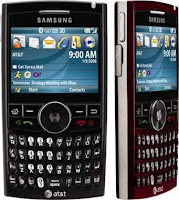 for voicemail and text messaging, and a voice plan. Switching carriers also gave me a bit of extra bargaining power with the salesman when it came to accessories and discounts on my monthly bill. The cost of the product I was getting wasn't a factor - I'd rather pay extra for something good - but on a three-year term, this phone cost me a mere $49.99.
But don't get this phone just because I say it's the best one. It's not. It's the best one for me. Getting a good phone, especially where selection is as limited as it is in Canada, is all about knowing what you want, and knowing what you can live without. It all comes down to compromises.
For me, my absolute must-haves were:
- unfaltering processor speed
- memory
- keyboard
- software compatibility
- tiny size (did I mention it's smaller than the iPhone?)
Based on the selection of phones available, in order to get these features I ended up having to be comfortable giving up:
- the tiny size of the HTC touch
- the touch screen of the iPhone, Palm, and HTC devices
- the large keyboard of the HTC 6800
- any software that only runs on Palm (I think my school has a patient logging software that only runs on Palm)
- the iPhone
SOFTWARE
This is the final thing I am considering for my PDA. I currently have:
- Epocrates (free drug reference)
- Diagnosaurus (free ddx reference)
- 5-minute clinical consult trial version
- Harrisons trial version
- Merck Manual trial version
I am also considering getting Toronto notes and/or a subscription to UpToDate in lieu of (or in addition to) the above software.
However, I would really appreciate any tips or input you can offer regarding which software you would recommend and why.
RECOMMENDATIONS
- When deciding on a PDA, you should decide which features you really want, which things are optional, and which things you can't live without. You should consider if you are looking for:
> Keyboard - large or small? does it feel right to you?
> Fast processor and lots of system memory - do you need tons or are you patient enough to wait for programs to load?
> Compatibility with a wide variety of medical software - is this important to you?
> Stability and customizability of the operating system
> Size - will you put it in a pocket or belt clip? Will you try to put it in your pocket because you are too cool to use a belt clip, and instead have trouble making it through doorways because it is very much of the same size as a cinder block?
> Battery life - how important is it to you that your device make it through the day?
> Carrier / service provider? If you are in the middle of a contract with Bell, Rogers or Telus (the 'big 3') you might not want to pay the fees to break it and switch. Or you may want to stay with who you've got. Or you may like the bargaining power that being able to threaten to switch carriers (or actually switching carriers) will give you. And, your carrier may have a great corporate rate plan through your medical association or hospital.
> Style / pop culture icon status / the need to be a sheep (you know I'm talking about the iPhone)?
> Style, but with the need to be different (ie. the Samsung Instinct)? - After you decide what you are looking for, be ready to make compromises. Not every phone will have all of the features you are looking for. Like I mentioned when I revealed my final decision above, I had to give up a lot to get the features I really wanted.
- Try out the phones you are interested in. This is the only way to know if the keyboard and the feel of the device are right for your fingers. Ask the sales reps to put in the battery and fire them up for you if you are really interested in one, and see what it's like when you open up many applications.
- Don't listen to Disney. When buying a phone, you should go with your head, not your heart. I liked the iPhone and almost impulse bought the HTC 6800 with its huge touch screen and massive keyboard, but after doing my research I know I would have regretted those purchases for the reasons listed above.
Hope this exposé is helpful to you. Please leave comments based on your experience... and about which software I should get!




