
 If you ask any doctor to tell you an interesting story from administering an injection, they probably have plenty. Most of them involve patients with countless tattoos and piercings who have to get one small needle to freeze a wound before it is stitched shut, but the fear of the needle is just too much, and the patients protest violently.
I was reading a needle story at Scalpel or Sword, along with the additional stories in the reader comments, and was reminded of a few of my own.
One of them did involve a huge, burly motorcyclist with a very, very worried look on his face, who kept asking the paramedics, "I'm not going to have to get a needle, am I?" He had too many tattoos to count. I'm not sure how he survived getting those if his fear was that intense.
Another involved a man who must have had more than half his body weight consisting of metal from piercings. He had cut open his arm with a grinder at work, and was placed in the minor procedures room at the ER to be stitched up. By the time I was in to see him fifteen minutes later, he was clutching the sheets, face down in the pillow, crying and screaming at the top of his lungs. As soon as he saw me, he shouted, "Get me out of here! There are needles in here!" I looked around, and didn't see any. I told him they were all put away, which didn't console him at all. "I don't care!" he screamed. "I know they're in here somewhere!"
While the freezing can burn a bit when people are given needles in a wound, vaccinations don't usually hurt very much if they're given properly. I've gotten 16 needles in the past five years or so, and given many more than that, and have hurt or been hurt hardly ever. While technique is most of it, anecdotal evidence is strong that a good portion of it is in the way you prepare the patient - if you tell them that it won't hurt very much, they often shout a lot less than the ones you tell them "this is really going to hurt."
Monday, August 11, 2008
Every doctor has a needle story or two

Thursday, August 07, 2008
Medicine still amazes me...and still lets me down
 As I learn all the physiology, pathology and pharmacology that medical school has to offer, sometimes there are unique things I see during my medical training that really, really impress me.
Whether it's the capabilities of a 3D reconstruction of a CT scan of a bone or the heart, or watching a patient's debilitating tremor disappear instantly at the press of a button activating a microelectrode in their brain, or re-starting the still heart of a dead person inside the chest of someone else, I occasionally find myself with my jaw on the floor when I learn things that medical practitioners are able to do and see that, only a few years ago, were an impossibility.
Then again, judging by something that happened earlier this month, perhaps I'm just easily impressed.
The doctor I'm working with was called from his office to go see Catherine, a pregnant woman in the hospital. She is early in her third trimester, but started having contractions. Of course, he explained, calls like this come right at the end of the lunch shift to provide the maximum inconvenience to him and the patients waiting in his office. He also explained that disruptions to the office like this are a part of the reason many other family practitioners don't do obstetrics anymore.
We're taught that a lot of information from a patient can be gained from the first part of the physical exam - from "five feet away," or the first glance of the patient at the foot of the bed. This patient was a great example of this. We had barely entered her room, and right away, we knew that Cathy was not doing well.
More than anything, Cathy was incredibly anxious, and for good reason. On the drive over, the doctor had explained to me that Cathy had never been pregnant, and it had been her dream to have a child. She and her husband Dale had been trying for years. No reason for her and her husband's infertility could be found, and finally, after several tries of drug-assisted and then subsequently in-vitro fertilization attempts at a high financial and emotional expense, this woman was now pregnant. And at 41 years old, Cathy knew just as well as we did that if something went wrong with this pregnancy, there likely wouldn't be another chance.
The doctor did a quick exam, and was convinced that the cervix had not begun to dilate. The baby's heart was still beating normally, and monitoring of the uterine muscle contractions revealed uterine muscle activity, but it wasn't clear if this was due to actual contractions or more minor uterine irritability.
Just a few years ago, Cathy would likely be admitted for observation, at a cost of a couple thousand dollars a day. She might not end up being in labour, and might not end up delivering for weeks... meaning a long, expensive stay in the hospital, with an expensive air ambulance transfer to a big-city hospital, with little benefit. On the other hand, she could be sent home, then suddenly go into full-blown labour, and deliver a premature infant away from the hospital after being sent home. How do you spell "lawsuit" again?
I was surprised to hear that this dilemma is not faced nearly as often thanks to an expensive but convenient lab test looking for fetal fibronectin. This protein, made by the fetus, is found in the mother's cervical secretions only if the mother is likely to deliver within the next four weeks. By taking this swab, and getting the results from the lab a mere twenty minutes later, we were able to conclude with resonable certainty (the lab test is correct 15 out of 16 times, according to the packaging) that Cathy was not going to have a premature delivery, and that she could safely go home.
Despite the things I learn that amaze me, large or small, there still times that I am disappointed by the failures of modern medicine. So many diseases cannot be cured, and many can barely have symptomatic relief.
Earlier this week, I had to look into the eyes of a 83-year-old woman in a wheelchair who was begging me to fix her legs. She could no longer walk, and she desperately wanted to be able to. After she had left, my supervising doctor told me that she lost the use of her limbs because of a progressive neurodegenerative disease for which there is no cure, and she often forgets that this happened years ago because of her long-standing dementia. She has two diseases that, despite all of the advances in medicine these days, it still seems as though we can't do much more for her, and the millions with similar conditions, than apply a band-aid.
I'm told that throughout my medical career the advances in medical technology are expected to be staggering. Who knows what clinical decisions will be made much easier because of medical advances, or which devestating diseases will soon become relics of the past. Waiting to hear what the future will bring, and the chance to put these discoveries into action to change peoples' lives, is yet another exciting part of living a life of medicine.
Thursday, July 31, 2008
Speeches for Medical Students
A little while ago somebody googled my blog looking for "SPEECHES FOR NEW MEDICAL STUDENTS." (Yes, I do sometimes look at the things you type in order to find my blog. Sometimes I even make fun of the weirder ones.)
I'm not sure if the googler was a professor who needs to give a speech to welcome new medical students, or a new medical student who can't wait to hear what you're going to learn about when you start classes.
My money is on the first one... in the many times I end up helping older people with basic computer things, I have found that lots of them aren't aware that the CAPS LOCK button does something other than ensure your cap doesn't get blown off in the wind.
Digressions aside, for whatever your intention, here is a summary of some of the speeches we have received in medical so far. Hopefully here you find what you are looking for.
SPEECH # 1: "CONGRATULATIONS!"
SPEECH OCCASION: First day of medical school (Morning)
SPEECH GIVEN BY: Faculty member up to but not including the Dean.
SYNOPSIS: Congratulations! You are the best of the best! Here is a slide show of all the people in our department. Come see us anytime! Don't forget - you're the best - and congratulations. And one more thing: from all of us, congratulations.
# OF TIMES THE WORD "CONGRATULATIONS" USED: 529
SPEECH #9: "SEEING PATIENTS"
SPEECH OCCASION: Second day of medical school (Afternoon)
SPEECH GIVEN BY: Faculty members of the Family Practice course
SYNOPSIS: Congratulations on making it in to medical school and starting a career of giving professional advice to patients! But don't try giving anybody advice while you're still in medical school. You're allowed to ask patients what their expectations are of the visit, though. Congrats!
# OF TIMES THE WORD "CONGRATULATIONS" USED: 116
SPEECH #4, 9, 10, 12, 13, 15, 18, 19, 22, 28: "PROFESSIONALISM"
SPEECH OCCASION: Following an expectation of our faculty that is not met by the students, or the sending of an inappropriate e-mail by a single inappropriate student
SPEECH LENGTH: Variable, usually 10-30 minutes
NUMBER OF STUDENTS PRESENT: Variable, declines throughout the semester
SPEECH GIVEN BY: Faculty member, increasing in rank and decreasing in familiarity to the students
SYNPOSIS: Don't talk during lecture, don't bend the bendable microphones in the teleconferencing rooms, don't bring coffee into the lecture hall, and don't send inappropriate e-mails to professors.
# OF TIMES THE WORD "CONGRATULATIONS" USED: 0
SPEECH #11: "EXAMS ARE COMING UP"
SPEECH OCCASION: 1 week before end-of-first-year finals
SPEECH GIVEN BY: A faculty member introduced to us in the first week whom none of us remember
SYNOPSIS: Just because you pass all your finals, it doesn't mean we will let you pass first year. Also, if you fail a final, most people get to re-write finals they fail, but don't expect this. Remedials are a privilege, not a right. Study hard.
# OF TIMES THE WORD "CONGRATULATIONS" USED: -1
SPEECH #29: "WELCOME TO SECOND YEAR"
SPEECH OCCASION: First day of second year
SPEECH LENGTH: 10 minutes
SYNOPSIS: First year was a cakewalk. This year, you have to study your butt off. You have to read outside the lectures. The teachers aren't really here to teach this year, just to give you an idea of what you need to study on your own. This is my office staff, they work for me. Study.
# OF TIMES THE WORD "CONGRATULATIONS USED: once, sarcastically
Tuesday, July 29, 2008
Why should pre-med students read medical blogs? Because they'll help you get into medical school.
One of my biggest mistakes as a pre-med student was not taking advantage of the online medical blogging community. Not every medical student can live beside a doctor for every moment of every day for a month, waking up for every midnight page, to learn if being a doctor is something they would be interested in doing. Reading blogs, however, can be a great substitute for that. You will better understand what being a doctor involves - the good and the bad. You'll learn about the incredible privilege it is to be a physician and the most exciting moments in the OR. You'll also learn about the patients that some doctors want to strangle, such as drug seekers, the patients whose treatment suffers because of drug seekers, and about the other side of those annoying patients from some enlightened physicians and residents who go beyond their frustrations to see these patients for the sick people they are. You'll learn from the mistakes of medical students and read what residents wish they had done differently. You'll read about the anguish that physicians go through when their patients sue them for seemingly nonsensical reasons (some with happy endings). And then you'll be able to think about whether or not you're cut out for those types of things. You'll know for sure if medical school is right for you You'll learn the horrible parts about medical school... and be able to make a more informed decision as to whether or not you think you'll survive. Medical blogs provide amazing insight into what medical school is like, an idea of what medical school exams are like, and how it feels when it's all over. You'll learn what being pimped means and how med students react to it and the subtle, unspoken rules involved. Of course, there's nothing like actually going through it, but you can save yourself years of stress from applying and trying to succeed in medical school if you decide it is not right for you - medical blogs can even help you figure out if maybe you shouldn't be a doctor. You'll learn about how doctors interact with other professions What does a nurse practitioner do, and how do their domains differ from what a doctor does? Before I was in medical school I didn't know anything about interprofessional politics, turf wars, and the potential for amazing things to happen when there is collaboration between doctors and other professions. That's why if you're pre-med, reading medical blogs goes beyond reading just physician blogs. You can read blogs by doctors of every specialty (ER doctors, urologists, surgeons, GPs, oncologists...), medical students and doctors in training from all around the world, nurses of every specialty (ER Nurse, nurse anaesthetist...), other health professionals such as respiratory therapists, and other health care professionals such as medical research blogs, healthcare law, policy, and ethics blogs... and the list goes on. Medblogs can give you a perspective on how these different professions work together in the same problem - see, for example, the story Perspectives, written in three parts: part I by a cop, II by a paramedic, and III by a nurse. As well, by learning about other professions, you'll have a better idea of whether or not their scope of patient care is more along the lines of what your career interests are. You'll learn more about the perspective of a patient Whether or not this helps you get into medical school, this is crucial to becoming a good doctor. There are some fantastic patient blogs that will provide you with fantastic insight into what it is like to live with an illness from many perspectives. Some blogs contain lists of ways to deal with certain patients...a great way to improve bedside manner. Some blogs even have the rare, heart-wrenching glimpse of reading the entire journey of what it is like to be diagnosed with, fight, and even lose a battle with an illness (one of the most memorable blogs I have ever read). Reading stories like those when I was pre-med would have done nothing but amp up my motivation to work hard, so that I could make it to the point where I could meet unbelievably inspiring patients like that in real life. You'll get a chance to have conversations with medical professionals ...which can be a hard thing for pre-meds to arrange face-to-face. Through med blogs, though, you can get involved with the profession in a unique way - by engaging in discussion, leaving comments and e-mailing blogging doctors, I have benifited from get 'face time' and advice from physicians that I could never get elsewhere or in such a short amount of time. You'll get a better idea about medical controversies Did you know some medical professionals don't think fibromyalgia isn't a real disease? or that there are many schools of thought on lyme disease and whether it is over- or undertreated? Reading blog posts on topics like this, and the often inflammatory comments that follow them, will help you learn about such controversies. Better yet, you'll learn how to answer those dang ethical questions Bloggers write about ethical situations all the time. Even if one comes up in your interview that you never heard of before, by reading about many other real-life situations, and reading the comments that other readers provide, you'll become a star at answering those intimidating ethical questions. Check out the Wall Street Journal's Health Ethics Blog posts, or, believe it or not, a Bioethics Blog exists. If, like me, you prefer stories to the more theoretical ethics discussions, though, check out posts by clinicians on ethical dilemmas. Your MCAT mark will triple. Okay, maybe only double. And no, that's not a guarantee. But it might go up a little bit if you find some advice on the MCAT that relates to you, like whether or not you should take an MCAT class. So you're sold now, right? How does someone start reading medical blogs? If you've stumbled upon this post and want to give medical blogs a try, but you aren't sure where to start, check out Vitum's Guide to Medical Blogs for Beginners! Do you have any other advice for pre-med students? You bet. Send a cheque or money order to... just kidding, it's all here. This post was a year in the making... hope you liked it! Use the comments section to let me know if there are any other ways you think reading medical blogs helps pre-medical students!
My excuses not to were stupid. I didn't read medical blogs for the same reasons that I didn't watch medical shows - it wasn't long into a show that I started getting reminded how much I wanted to be in those medical situations, and then I would inevitably end up feeling guilty for watching TV instead of studying.
In retrospect, though, by avoiding blogs I made things a lot more difficult than they needed to be. That's because reading medical blogs can dramatically improve your chances of getting in to medical school.
You'll do better in your interview, improve your essay, learn more about the life of a doctor and whether medicine is right for you, and you could even improve your MCAT score.
You'll do better in your interview
All great speakers use stories to make their speeches memorable and engaging - the same goes for good interview subjects. You'll find this if you critique your friends' interviewing skills, which is one of the most helpful things you can do to prepare for the interview (something that should not be overlooked)...unless they tell you a story that captivates you, you'll tune out within seconds.
A lot of medical blog posts are stories...some of which are extremely well-told. Try as I might to be a fantastic narrator, the sad truth is the further you get from this blog, the better the stories get. Check out the story Memorable Patients, Part 4 at Surgeonsblog for a stunning example.
By reading medical blogs, you'll get in the habit of reading medical stories... and if you tell the really good stories to your friends, you'll also get lots of practice, so when you tell stories from your own medical experiences, your listeners will be captivated. And that is exactly what you want your interviewers to be!
You'll write a better essay
Unlike medical admissions committees with admissions essays, people don't read blogs because they have to. So, even though many bloggers say they may mostly blog for themselves, they usually try to make their posts engaging enough that people will read them...and return for more. If you start to figure out what makes a reader interested in a blog, and can apply it to your essay, you'll be well on your way towards making your essay stand out from a pile of 2,000 admissions essays. Check out some of the most popular medical blogs, as ranked by edrugsearch, which have readers always clamoring for more stories, such as the ones by emergency room nurses, paramedics, and surgeons.
Wait...there's more! Beyond the technical side of being a better interviewee and essay writer, reading blogs will also help you with the content. This comes from a number of things, such as knowing for sure what medicine is all about and if medicine is right for you, and being able to explain to the admissions committee why you are sure of this. Just think about how well-researched you'll sound if an interviewer asks you if you're sure medicine is right for you... and you are able to give them succinct reasons with clinical examples to answer their question. Reading medical blogs can help you do that.
You'll know for sure if vitum medicinus (a life of medicine) is right for you
Thursday, July 24, 2008
Vitum goes high-tech: Which PDA I chose, and why
Now that clerkship is rapidly approaching many of my classmates and I are
 buying PDAs (personal digital assistants) or smartphones (cell phones that have the capability to load medical software). I ended up doing a ton of research and buying one this week, so I figured I'd save others some time and post what I found...despite the fact that "technical reviews" isn't getting a lot of votes on the poll in the sidebar (because it's not even listed).
If you have one, this review might not be that interesting to you... but please comment with your tips on which PDA medical software I should get! Thanks!
Though some students don't get a PDA and prefer to look things up in books, for me and most of my classmates, getting one isn't really an option. I've heard stories of students who get yelled at by their attendings for not having one... one of whom tried to retort that they just looked up things in pocket reference books. The attending said that was OK as long as the student carried every reference book they had with them at all times... and made the student do that for the day (Sounds like a surgeon to me). And I need a new phone, and I'm a huge nerd.
While in the last few years the classes arranged a large group order of a Palm product, this year that was cancelled due to the large variety of PDAs available, the PDA vs. smartphone the inability to settle on any single one of those options.
So, I was forced to do my own research, something I usually do extensively online before I buy any electronic product, and came up with one that I've now had for a few days and am very happy with. In case you're interested, here's what I came up with with regards to smartphones available in Canada.
THE CONTENDERS
I decided I wanted a smartphone instead of just a PDA, because I didn't like the thought of carrying around a Palm and a cell phone at the same time. With this in mind, I broke down my options into the following:
- The iPhone and Samsung Instinct
- A Blackberry product
- A Palm OS product
- A Windows Mobile product
When looking for a high-tech device to buy, I usually spend several days doing the following:
- reading expert reviews on C-net, PC World and various other cell phone review sites such as PhoneArena
- comparing specifications lists
- finding out what software would be compatible on each phone
- (the most fun part) - reading user reviews at those sites and Amazon, especially the ones that are very critical of the products, as people generally don't hold back when they say what they don't like about a product they spent a lot of money on.
Don't be fooled by the iPhone's music-playing capability: every phone listed here has the basic functionality of e-mail, internet, music, video, texting, phone, calendar, and contact lists. These are by no means complete reviews, just what's relevant to the use of the devices by a medical student. Here's what I found for each product:
>>> iPHONE, SAMSUNG INSTINCT, HTC TOUCH DIAMOND
PROS:
> Style: Needless to say, the iPhone is one of the most hyped-up and aesthetically stunning phones on the market, and you will rarely run out of people interested in your phone. Prepare for attendings to pimp you extra hard as a direct result of their jealousy.> Functionality: With their touch screens you can do much more with these phones than many others, such as rotate and flip flash cards with the Netter's Anatomy flashcards software. Great for preparing for when attendings pimp you on anatomy.
> Size: The iPhone is one of the smallest smartphones out there...but not the smallest.
CONS:
> Compatibility: Not many medical applications are sold for the iPhone yet and none that I know of on the Samsung operating system (which is what the Instinct, a supposed "iPhone killer," will run). Don't get me wrong, there are a few stunning applications and there will undoubtedly be more coming out in the next little while. However, I will probably get the most use out of the reference software at the start of the year, and didn't want to wait for the software to be released.
> Omissions: The iPhone is lacking in some basic things that every other phone has, such as expandable memory, removable battery, picture/video messaging, and even video for that matter. And when it comes to customization, it doesn't let you change very much in terms of system custom hacks, menu option ordering, and the like... if you are a techhy person this might bug you.
> Keyboard: As well, as touchscreen devices these don't have a button keyboard, so your typing speed will be limited since you can't type by feel. Only the Instinct lets you know you've pressed a button by vibrating a little bit.
> Cost: Canada has the second-highest rate plan fees in the world for this device. Your attendings will assume you are rich, and quiz you even harder to make sure you aren't in medicine just for the money.
> It's an Apple product: Baaa.... Who really wants to be a sheep?
>>> BLACKBERRY PEARL, CURVE
PROS:
> Operating System: The amazing stability, speed, and rarity of crashes of Blackberry devices makes it one of the best all-around smartphones available according to most reviews.> E-mail: Blackberry brought e-mail to the palm of peoples' hands way back in the day, and they still remain at the top when it comes to making devices that do this.
> Size: If you go with the Pearl, your smartphone will be the same size as most cell phones. If you go with the Curve, you aren't looking at much bigger.
CONS:
> Compatibility: Again, few medical PDA websites sell software for the blackberry. As well, there aren't many unlimited data plans for the Blackberry. I would have gotten a Blackberry if it weren't for these two issues.
> Music and photos: This is something that Blackberry has added as an afterthought to their primarily e-mail machines, and they have been playing catch-up ever since. But I have been told to not expect to have time to do things like take photos and listen to music during third year.
> The Pearl keyboard: This involves buttons that have 2 letters assigned to each one, something that supposedly takes a bit of getting used to.
>>> PALM TREO, CENTRO
PROS:
> Compatibility: The number one reason to get a Palm is because so much PDA software, medical and otherwise, is made for it. It was theoriginal PDA and as a result medical software has been made for it since the dawn of the PDAges.
CONS:
> Size: The Treo is a brick, which is why I could never justify getting it. Most phones that big at least have wi-fi, but the Treo doesn't even offer that. At least the Centro is small.
> Memory: The Centro has barely any, and so it is very sluggish (but remembers what keys you press when it freezes so they all show up on the screen when it comes back to life...annoying!), and crashes occasionally, which is why I could never justify getting it. It also looks like a toy (especially in the Strawberry Red color option).
> Keyboards: If, and only if, your fingers are the size of toothpicks, you will be able to type very well on the Treo and Centro keyboards. You will probably do very poorly at percussing your patients' abdomens, though.
>>> WINDOWS PRODUCTS: HTC TOUCH, HTC s640, HTC 6800, SAMSUNG JACK, SAMSUNG ACE, MOTOROLA Q9h
There are many more phones in this category, so for some phones the criteria below is a positive thing and for others, it's a negative thing. As a result I've ordered this section a bit differently.
> Stability: Windows Mobile (especially the Professional version, as opposed to the Standard version) tries to be a little computer and so is well-known for its potential to be a memory hog, sluggish, and crash more often than any of the airlines based in the Congo. This can only be overcome by a lot of memory and/or a fast processor.
>>> THE GOOD: HTC s640 (fastest processor, not a ton of memory), Samsung Jack (lots of memory, good processor)
>>> THE BAD: HTC Touch (tries to run the Professional version on very little amounts of memory...bad news) HTC 6800 (I read a review by a doctor who returned his HTC 6800 because it was too sluggish for his medical applications), Motorola Q9h, Samsung Ace> Battery life: Phones which use up a lot of memory can use a ton of battery life.
>>>THE GOOD: Samsung Jack, HTC Touch
>>> THE BAD: HTC 6800, HTC s640, Motorola Q9h, Samsung Ace
> Size: Only one of these phones is a beast.
>>> THE GOOD: Samsung Jack (smaller than the iPhone, actually), Samsung Ace, Motorola Q9h, HTC s640, HTC Touch
>>> THE BAD: HTC 6800. Useful for putting into a burlap sack with a number of unwanted excess kittens before heading to your local river.
> Touch screen: If you need the convenience of a touch screen the HTC 6800 and the HTC Touch are the only two of these devices that offer one. Most of these have scroll wheels to try and make up for it (though the Q9h doesn't).> Keyboard: Don't forget that choosing a keyboard comes down to feel, and anything I write here is trumped by how the phone feels under your fingers.
>>> THE GOOD: HTC 6800 (makes up for its massive size by being the only smartphone that offers a massive keyboard AND a touch screen), Q9h (in my opinion, the best keyboard on any handheld device)
>>> THE MEDIOCRE: Samsung Blackjack (small, but has nice spacing between the keys) Samsung Ace (but the keys are peaked so your fingers rest between the rows), HTC s640 (big keys with little spacing between them)
>>> THE BAD: HTC Touch (has an on-screen keyboard... I am not a fan)> Wi-Fi/Internet: Adds unnecessary bulk. You should be getting an unlimited data plan instead... just as fast and way more portable, and worth the fees to get access to online resources and poke your friends on Facebook between surgeries.
>>> THE GOOD: HTC Touch - uses Bell's mobile browser, which you can get Unlimited for $7/month. Everything else can get unlimited data for about $30.
THE DECISION
Whew! Told you I go all out with the research. So what did I settle on?
At the end of the day I chose to leave Bell after many years of good service to get the hardware I wanted. I settled on the Samsung Jack (known in America and on the review websites as the Blackjack II) through Rogers, with the (virtually unlimited) 6 GB monthly data plan, a value bundle
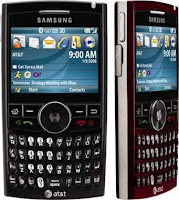 for voicemail and text messaging, and a voice plan. Switching carriers also gave me a bit of extra bargaining power with the salesman when it came to accessories and discounts on my monthly bill. The cost of the product I was getting wasn't a factor - I'd rather pay extra for something good - but on a three-year term, this phone cost me a mere $49.99.
But don't get this phone just because I say it's the best one. It's not. It's the best one for me. Getting a good phone, especially where selection is as limited as it is in Canada, is all about knowing what you want, and knowing what you can live without. It all comes down to compromises.
For me, my absolute must-haves were:
- unfaltering processor speed
- memory
- keyboard
- software compatibility
- tiny size (did I mention it's smaller than the iPhone?)
Based on the selection of phones available, in order to get these features I ended up having to be comfortable giving up:
- the tiny size of the HTC touch
- the touch screen of the iPhone, Palm, and HTC devices
- the large keyboard of the HTC 6800
- any software that only runs on Palm (I think my school has a patient logging software that only runs on Palm)
- the iPhone
SOFTWARE
This is the final thing I am considering for my PDA. I currently have:
- Epocrates (free drug reference)
- Diagnosaurus (free ddx reference)
- 5-minute clinical consult trial version
- Harrisons trial version
- Merck Manual trial version
I am also considering getting Toronto notes and/or a subscription to UpToDate in lieu of (or in addition to) the above software.
However, I would really appreciate any tips or input you can offer regarding which software you would recommend and why.
RECOMMENDATIONS
- When deciding on a PDA, you should decide which features you really want, which things are optional, and which things you can't live without. You should consider if you are looking for:
> Keyboard - large or small? does it feel right to you?
> Fast processor and lots of system memory - do you need tons or are you patient enough to wait for programs to load?
> Compatibility with a wide variety of medical software - is this important to you?
> Stability and customizability of the operating system
> Size - will you put it in a pocket or belt clip? Will you try to put it in your pocket because you are too cool to use a belt clip, and instead have trouble making it through doorways because it is very much of the same size as a cinder block?
> Battery life - how important is it to you that your device make it through the day?
> Carrier / service provider? If you are in the middle of a contract with Bell, Rogers or Telus (the 'big 3') you might not want to pay the fees to break it and switch. Or you may want to stay with who you've got. Or you may like the bargaining power that being able to threaten to switch carriers (or actually switching carriers) will give you. And, your carrier may have a great corporate rate plan through your medical association or hospital.
> Style / pop culture icon status / the need to be a sheep (you know I'm talking about the iPhone)?
> Style, but with the need to be different (ie. the Samsung Instinct)? - After you decide what you are looking for, be ready to make compromises. Not every phone will have all of the features you are looking for. Like I mentioned when I revealed my final decision above, I had to give up a lot to get the features I really wanted.
- Try out the phones you are interested in. This is the only way to know if the keyboard and the feel of the device are right for your fingers. Ask the sales reps to put in the battery and fire them up for you if you are really interested in one, and see what it's like when you open up many applications.
- Don't listen to Disney. When buying a phone, you should go with your head, not your heart. I liked the iPhone and almost impulse bought the HTC 6800 with its huge touch screen and massive keyboard, but after doing my research I know I would have regretted those purchases for the reasons listed above.
Hope this exposé is helpful to you. Please leave comments based on your experience... and about which software I should get!



